

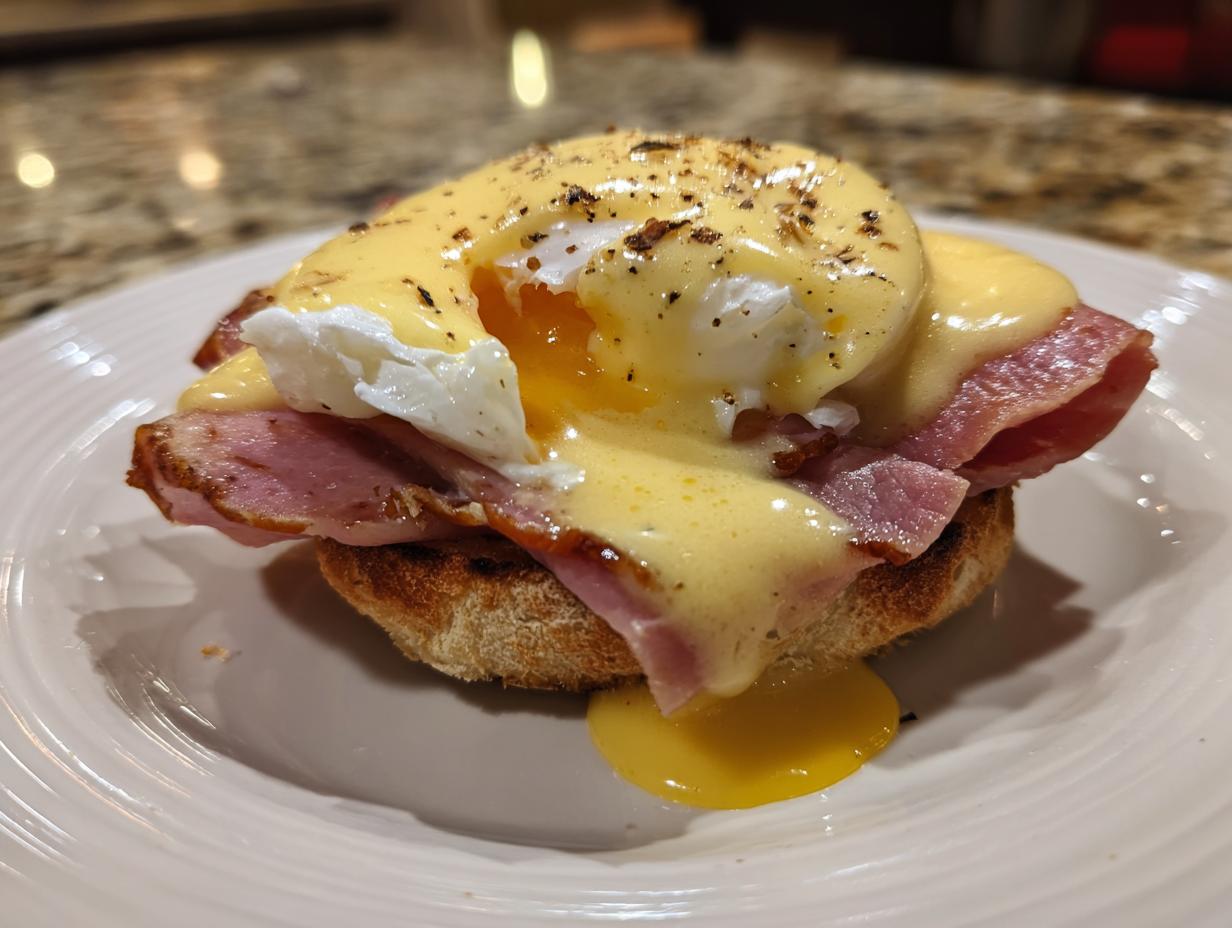
There is nothing quite like sinking into a perfect weekend morning knowing that eggs benedict is headed your way. For years, folks thought they needed a fancy reservation to get that rich, buttery sauce and perfectly shaped poached egg. Well, I’m here to tell you that making restaurant quality breakfast at home is completely achievable! My goal, much like when I taught third grade, is to explain every step with patience and absolute clarity. If you can use a blender, you can master this creamy easy weekend brunch classic today.
- Why This Classic Eggs Benedict Recipe Works for Home Cooks
- Ingredients Needed for Classic Eggs Benedict
- Step-by-Step Instructions for Making Perfect Eggs Benedict
- Tips for Success Making Eggs Benedict
- Delicious Eggs Benedict Variations
- Make Ahead Brunch Meals: Preparing Eggs Benedict Components
- Frequently Asked Questions About Eggs Benedict
- Best brunch dishes
- Storage and Reheating Instructions for Leftover Eggs Benedict
- Estimated Nutritional Data for Eggs Benedict
- Share Your Home Brunch Creations
Why This Classic Eggs Benedict Recipe Works for Home Cooks
When I developed this recipe, I wanted to take away the intimidation factor, much like I did when teaching my students a big lesson. My goal is always reliability. You shouldn’t need a culinary degree to enjoy a restaurant quality breakfast at home, especially when preparing an easy weekend brunch for company. This method is dependable because we simplify the two scariest parts: the eggs and the sauce.
- It trusts simple tools—the blender takes the guesswork out of emulsification.
- It uses techniques refined over years to ensure the egg whites stay neatly tucked around the yolk.
- It delivers that rich, gourmet result that tastes far more complicated than it is!
Why settle for less when you can achieve perfection right here? You can even read about other dependable morning meals right here on the blog. We are aiming for results that make others ask where you ate breakfast! If you want to see how other cooks trust this style, check out this great resource on making perfect Eggs Benedict.
Foolproof Poached Eggs Technique for Perfect Eggs Benedict
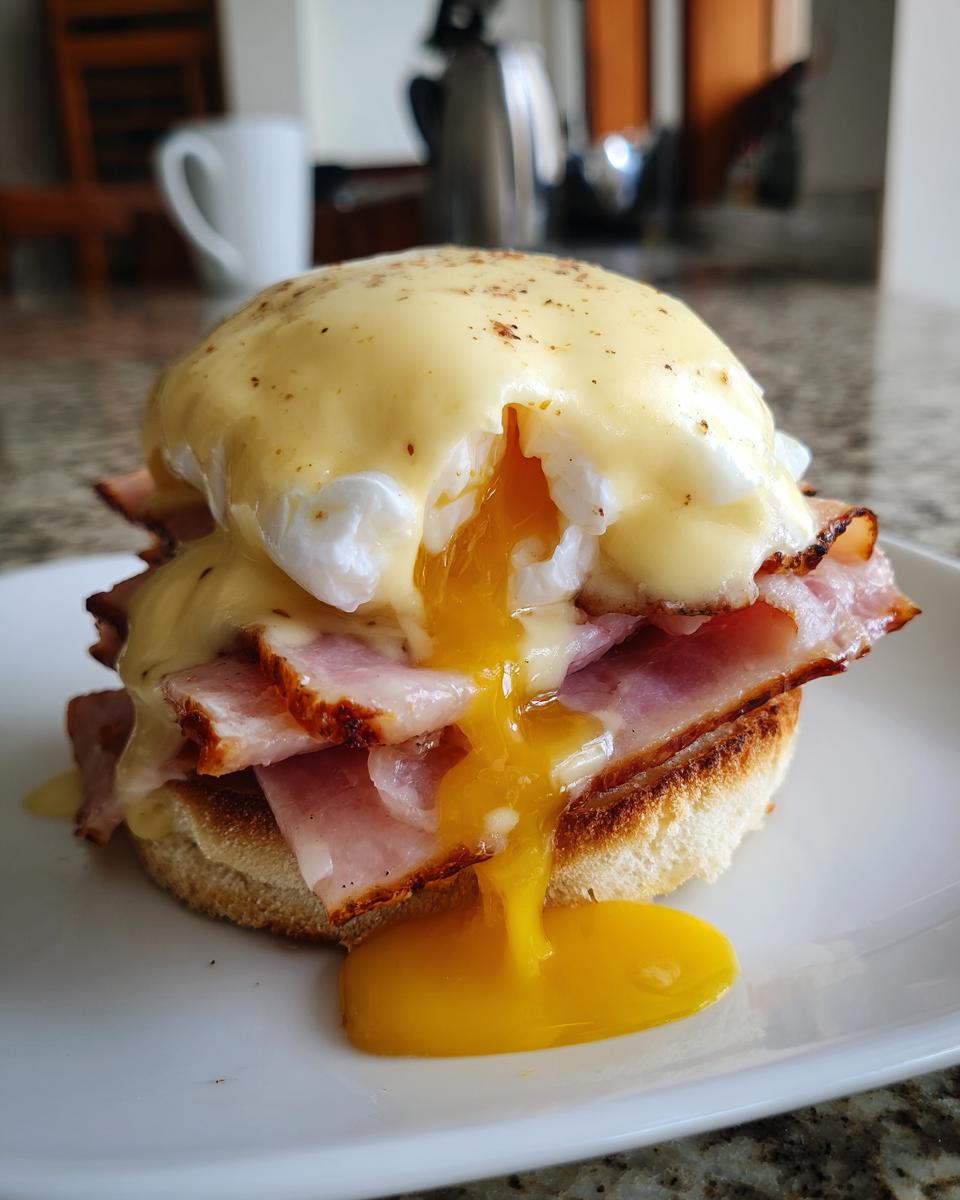
The biggest hurdle for most folks trying eggs benedict is the egg. Don’t you worry about that one bit! My tried-and-true poached eggs technique centers on two things: very fresh eggs and water movement. Crack your egg gently into a small bowl first—this is so important! Then, once the water is at that perfect gentle simmer, make a soft whirlpool. Sliding the egg into that gentle spin keeps the white from floating away. Fresh eggs are crucial because the whites clump nicely around the yolk, giving you that beautiful little package every time.
Achieving Creamy Sauce for Eggs with Hollandaise in a Blender
Forget standing over a double boiler whisking until your arm aches! That’s not how we do it in my kitchen anymore. We use a blender! This is the magic trick that makes eggs benedict an achievable Sunday morning project instead of a once-a-year holiday feat. The hollandaise in a blender method is almost instantaneous. Once you stream in the warm butter slowly while the machine is running low, the sauce thickens beautifully. It gives you that signature velvety texture without needing any professional chef’s patience.
Ingredients Needed for Classic Eggs Benedict
When we talk about making eggs benedict from scratch, we need to treat these simple ingredients with respect. Good building blocks always lead to a great finished meal. Trust me when I say that the quality of your butter and eggs really shines through in the final flavor, especially in that rich Hollandaise.
For the poaching water, don’t forget that splash of white vinegar; it seems funny, but it helps the whites hold shape! Everything else is straightforward, but pay close attention to the butter for the sauce—it needs to be melted but warm, not scorching hot, particularly when using the blender method.
Here’s what you’ll need gathered on your counter before we start putting this masterpiece together for four lucky people.
Step-by-Step Instructions for Making Perfect Eggs Benedict
Alright, let’s put this all together! This is where the magic truly happens, and you’ll be amazed at how quickly you assemble these stunning eggs benedict plates. I like to get my base layers ready while the water for poaching starts to heat up. If you’ve got some roasted potatoes ready to go on the side, now is the time to make sure they are hot too!
Preparing the Base: Muffins and Meat for Your Eggs Benedict
Grab your English muffin halves and give them a nice toast until they are golden brown around the edges. Next, let’s warm up that Canadian bacon or ham. You just want it heated through and maybe just a touch crispy on the edges, so give it a quick sauté in a lightly buttered pan. Don’t burn it! Set these warm beauties aside while we tackle those two tricky elements: the sauce and the eggs.
The Blender Method for Rich Homemade Hollandaise Sauce
Pour your egg yolks, lemon juice, salt, and cayenne right into the blender jar. Give it a quick whizz—just ten seconds to combine things. Now, this is the most important part for a silky sauce: with the blender running on the LOWEST speed, you must slowly, slowly dribble in that warm, melted butter. It needs to be a thin stream, like a steady drizzle from a watering can! If it gets too thick, just add a splash of warm water to loosen it up. Keep it warm for serving.
Mastering the Simple Poached Eggs Technique
Don’t let poaching scare you! You want your water in a wide, shallow pan barely simmering—think tiny little bubbles, never a furious boil. Add that tablespoon of vinegar, please! Crack each egg into a tiny bowl first. Before adding any eggs, stir the water quickly with a spoon to create a gentle little whirlpool right in the middle. Carefully slide your egg right into the center of the spin. That spinning water helps hold the white together around the yolk. Poach for about three and a half minutes for that perfect runny center you need for wonderful eggs benedict.
Assembling Your Final Eggs Benedict Masterpiece
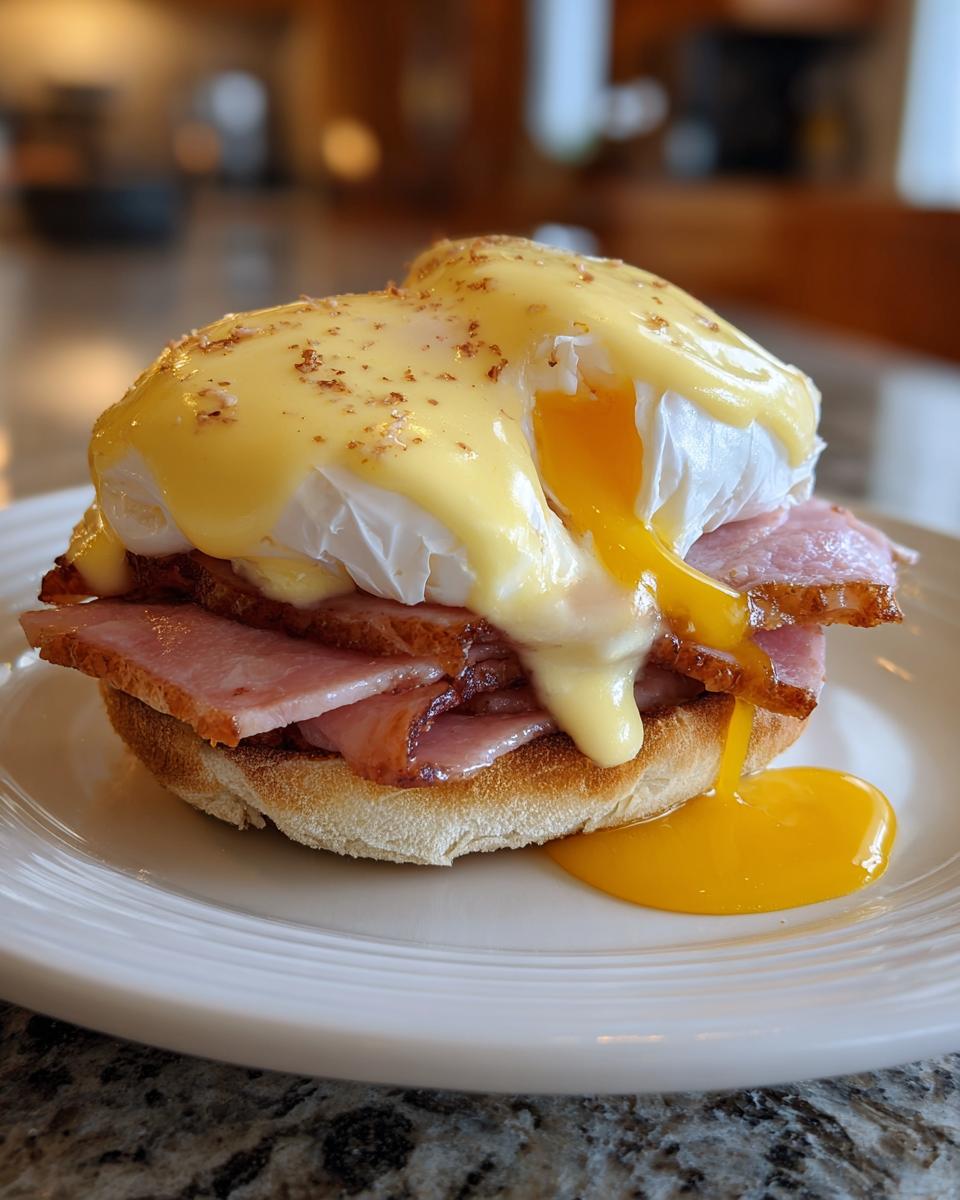
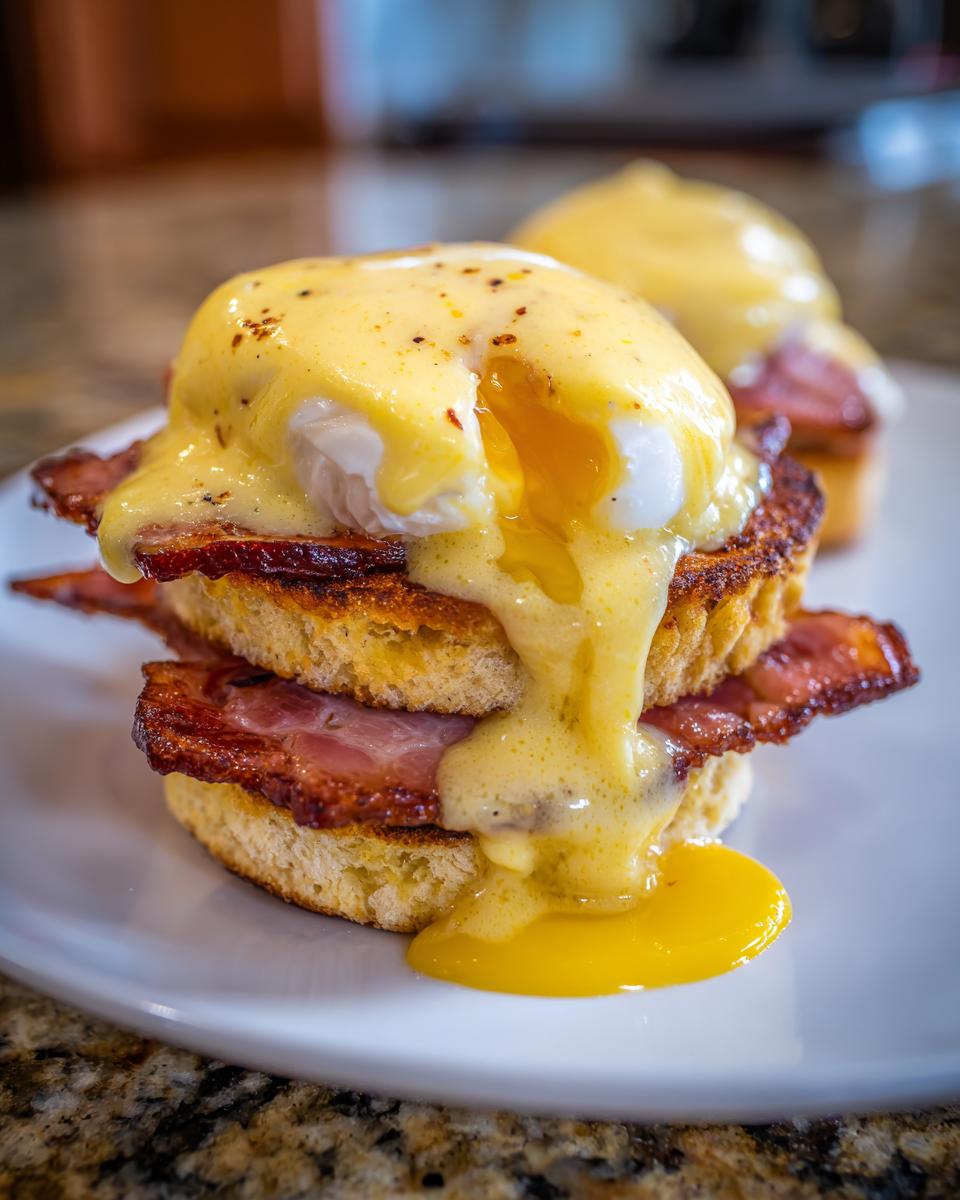
Time to stack! Start with your toasted muffin half, then place your warm Canadian bacon on top. Gently nestle that freshly poached egg right on top of the bacon layer. Remember to use your slotted spoon to dab off any excess water first! Now, immediately cover that beautiful egg with a generous spoonful of your fresh, creamy homemade hollandaise sauce. Serve this glorious dish right away so everyone enjoys the warmth and texture together!
Tips for Success Making Eggs Benedict
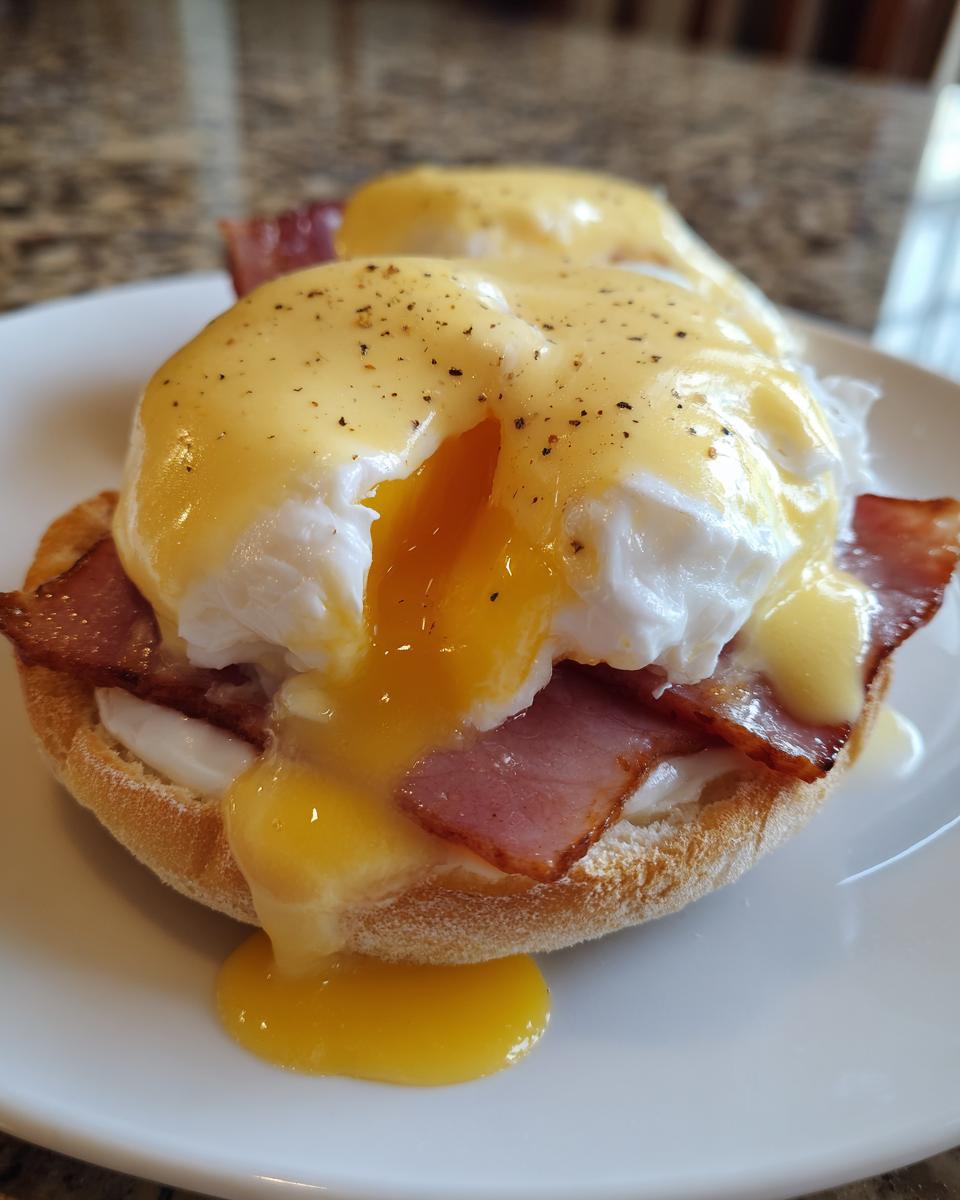
If you want your eggs benedict to truly shine, it comes down to smart assembly timing and using ingredients at their peak. My biggest piece of advice, honed from years of cooking for crowds, is this: don’t try to do everything the second before serving!
Please, always start with the freshest eggs you can find at the market. Those supermarket eggs that have been sitting around sometimes have watery whites, which makes poaching a real headache. Keep your poached eggs warm for only a minute or two on a paper towel while you finish the sauce.
Speaking of the sauce, remember you can gently reheat that blender Hollandaise if needed, but go slowly! If you have extra time, I highly recommend making a batch of chocolate pudding for dessert earlier in the day to simplify your brunch rush. For more great timing ideas, check out this wonderful recipe guide on making Eggs Benedict where they discuss chilling components ahead of time.
Delicious Eggs Benedict Variations
While the classic version outlined above is the gold standard for my kitchen, I know sometimes you want to shake things up, especially when planning a big weekend gathering! Sometimes you just need fun eggs benedict variations to keep things interesting, or maybe regular English muffins just aren’t in the pantry. We have to flex a little!
If you’re looking to substitute the base, forget the muffin entirely and try using a crispy potato latke instead. Oh, my goodness, the crunch underneath that soft egg and creamy sauce is just heavenly. If you enjoy potatoes in your breakfast potatoes, this is a natural next step!
Another fantastic idea, perfect for when you want a little zip, is to go Mexican-inspired. They dip into zesty salsa and avocado flavor, which cuts through that rich Hollandaise beautifully. You can find a wonderful flavor profile similar to that style by checking out this recipe for Mexican Eggs Benedict-Style.
Trying the Eggs Benedict Casserole Recipe for a Crowd
Now, if you’re hosting a big crowd—maybe for a holiday brunch menu—and look at poaching 12 eggs and making 12 mini-sauces, you might just want to sit down! That’s where the eggs benedict casserole recipe comes to the rescue. Instead of assembling individually, you layer bread, ham, and cheese in a big baking dish. You pour the egg mixture over it all and bake until set. It’s easier to serve a crowd this way, and you still get that wonderful flavor combination, just baked together beautifully!
Make Ahead Brunch Meals: Preparing Eggs Benedict Components
When you’re planning your big holiday brunch menu, the key is managing your time wisely. Nobody wants to be running around frantic right when Aunt Carol walks in the door! The wonderful news is that this traditional recipe is quite forgiving when it comes to making components ahead of time, which makes it perfect for true make ahead brunch meals.
As I mentioned in my notes, you absolutely can make your simple poached eggs a day or two in advance. Just keep them submerged gently in cold water in the refrigerator. When you are ready to serve your eggs benedict, gently warm them up in simmering water for just a minute or two. The Hollandaise sauce is also a fantastic make-ahead item! Keep it covered in the fridge. When it’s time to serve, reheat it very carefully over low heat or in short bursts in the microwave, stirring often. This foresight lets you focus on enjoying your morning!
If you’re looking for another great make-ahead option for your table, you might enjoy my recipe for Scalloped Potatoes and Ham Casserole, which always clears the plate quickly!
Frequently Asked Questions About Eggs Benedict
It’s funny how just a few standard questions pop up every time I share this eggs benedict recipe! That simply means we all want reliability in our classic breakfast ideas. I’ll give you the quick answers I usually offer my grandkids when they try this for the first time.
Can I use regular stick margarine instead of butter for the Hollandaise?
Oh, honey, you could, but I really advise against it if you want that beautiful, creamy sauce. Margarine splits much easier than real unsalted butter when heated, and it doesn’t have the rich flavor that makes the Hollandaise sing. For the best results with that homemade hollandaise sauce, stick to the real butter warmed up nice and gently. Trust me, it makes all the difference in the world for these gourmet breakfast ideas.
Do I really need to put vinegar in the poaching water?
Yes, please do! That little bit of acid—that tablespoon of white vinegar—helps the egg proteins coagulate faster. This is my secret for getting the whites nice and firm so they wrap neatly around that runny yolk center every single time. It doesn’t affect the final taste of your poached eggs technique, but it makes your life so much easier! You can find some other tips for making other
Best brunch dishes
on my site, too.
What if my Hollandaise sauce breaks in the blender?
Don’t panic! This happens to everyone, even professionals. If your sauce looks grainy or separated, it just means the butter went in too fast, or it was too hot. Take one fresh egg yolk in a clean little bowl, start mixing it with a whisk, and very slowly drizzle the broken mixture into the fresh yolk. It usually comes right back together into that perfect creamy sauce for eggs. If it still won’t emulsify, check out this great resource on troubleshooting Eggs Benedict.
Can I substitute the Canadian bacon for something else?
Absolutely! While Canadian bacon is traditional, you can use thin slices of good quality ham, or even smoked salmon if you’re leaning toward a fancier brunch recipe. A popular choice these days is layering in some sautéed spinach for an Eggs Florentine style!
Storage and Reheating Instructions for Leftover Eggs Benedict
Now, as much as I wish leftovers of perfectly assembled eggs benedict would taste the same the next day, they just won’t. That perfectly toasted muffin gets soggy fast under the sauce, and the poached egg texture degrades quickly when refrigerated together. So, we only store the components!
The Hollandaise sauce? It keeps beautifully! Store it in an airtight container in the fridge for up to three days. Just remember my earlier warning: when reheating, you must do it slowly and stir constantly, or it can split on you. That slightly acidic sauce actually holds up quite well.
As for the poached eggs, I mentioned this earlier for planning, but it’s worth repeating: store them submerged in cold water in the fridge. When you’re ready for seconds, gently warm them through in a shallow pan of barely simmering water until they are hot—about 60 to 90 seconds. Toast some fresh muffins and warm up your ham, and you’re back in business!
Estimated Nutritional Data for Eggs Benedict
I always measure my ingredients carefully, but when we talk about food made this rich and special, remember that these numbers are estimates. What you see here reflects the recipe ingredients divided evenly among the four servings listed. We used standard Canadian bacon and the listed proportions for the blender sauce.
If you are watching sodium or fat intake, this is a dish for special occasions—it truly is an elevated breakfast idea! We’re using real butter because you simply can’t get that melt-in-your-mouth texture any other way.
Here is what you can generally expect per serving, based on the recipe yield of 4 whole servings:
- Calories: Approximately 550
- Total Fat: Around 45 grams (with about 22 grams of that being saturated fat)
- Carbohydrates: About 20 grams (1 gram of that is fiber)
- Protein: A satisfying 22 grams
- Cholesterol: Higher due to the yolks, estimated near 350 mg
- Sugar: Very low, about 3 grams
Keep in mind that swapping out Canadian bacon for something like prosciutto or using a different type of bread will certainly shift these figures! But for this classic take, those figures give you a good guideline.
Share Your Home Brunch Creations
Now that you’ve mastered this gorgeous eggs benedict, I truly hope you’ll share your success! Cooking is all about sharing those wonderful moments, whether it’s the story of your perfectly poached eggs or the look of delight after someone tries that creamy sauce for the first time. Please come back and leave a little note below letting me know how it went.
If you snap a picture of your classic breakfast ideas plate, I’d love to see it over on social media—it just warms my heart to see my recipes making their way onto your tables. You can learn more about our little community and what we’re cooking up next right here!
PrintClassic Eggs Benedict: Restaurant Quality Breakfast at Home

Make this classic brunch centerpiece at home. This recipe provides simple steps for perfectly poached eggs and a rich, creamy Hollandaise sauce made easily in a blender.
- Prep Time: 15 min
- Cook Time: 15 min
- Total Time: 30 min
- Yield: 4 servings 1x
- Category: Brunch recipes
- Method: Stovetop and Blending
- Cuisine: American
- Diet: Vegetarian
Ingredients
- 4 large eggs (for poaching)
- 4 English muffin halves
- 4 slices Canadian bacon or ham
- 1 tablespoon white vinegar (for poaching water)
- Butter or cooking spray (for muffins and ham)
- For the Blender Hollandaise Sauce:
- 3 large egg yolks
- 1 cup (2 sticks) unsalted butter, melted and warm
- 1 tablespoon fresh lemon juice
- 1/4 teaspoon salt, or to taste
- Pinch of cayenne pepper
Instructions
- Prepare the English Muffins and Meat: Lightly toast the English muffin halves. In a skillet over medium heat, lightly brown the Canadian bacon or ham slices until warmed through and slightly crisp. Set aside.
- Make the Hollandaise Sauce (Blender Method): Place the egg yolks, lemon juice, salt, and cayenne pepper into a blender jar. Blend on low speed for about 10 seconds until combined. With the blender running on low, slowly drizzle the warm, melted butter through the opening in the lid in a very thin, steady stream. Continue blending until the sauce is thick and emulsified. If the sauce is too thick, add a few drops of warm water. Keep the sauce warm, but do not let it overheat.
- Poach the Eggs: Bring a wide, shallow pan of water to a gentle simmer (small bubbles should form, but it should not boil rapidly). Add the white vinegar to the water. Crack each egg into a small bowl or ramekin first. Create a gentle whirlpool in the simmering water with a spoon. Carefully slide one egg into the center of the whirlpool. Poach for 3 to 4 minutes for a runny yolk. Remove the egg with a slotted spoon and place it on a paper towel to drain excess water. Repeat with the remaining eggs.
- Assemble the Dish: Place one toasted English muffin half on each plate. Top the muffin with one slice of warm Canadian bacon. Gently place one poached egg on top of the bacon.
- Serve Immediately: Spoon a generous amount of the warm Hollandaise sauce over each poached egg. Serve your restaurant quality breakfast right away.
Notes
- For simple poached eggs, use very fresh eggs; the whites hold together better.
- You can prepare the poached eggs and Hollandaise sauce up to 2 days ahead and gently reheat them before serving.
- For a variation, substitute the English muffin with toasted sourdough or a potato latke for Latke Eggs Benedict.
- To make an Eggs Benedict Casserole, layer bread cubes, cooked ham, and cheese in a baking dish, pour an egg/milk mixture over top, bake, and top with hollandaise before serving.
Nutrition
- Serving Size: 1 serving (2 halves)
- Calories: 550
- Sugar: 3
- Sodium: 650
- Fat: 45
- Saturated Fat: 22
- Unsaturated Fat: 18
- Trans Fat: 1
- Carbohydrates: 20
- Fiber: 1
- Protein: 22
- Cholesterol: 350