

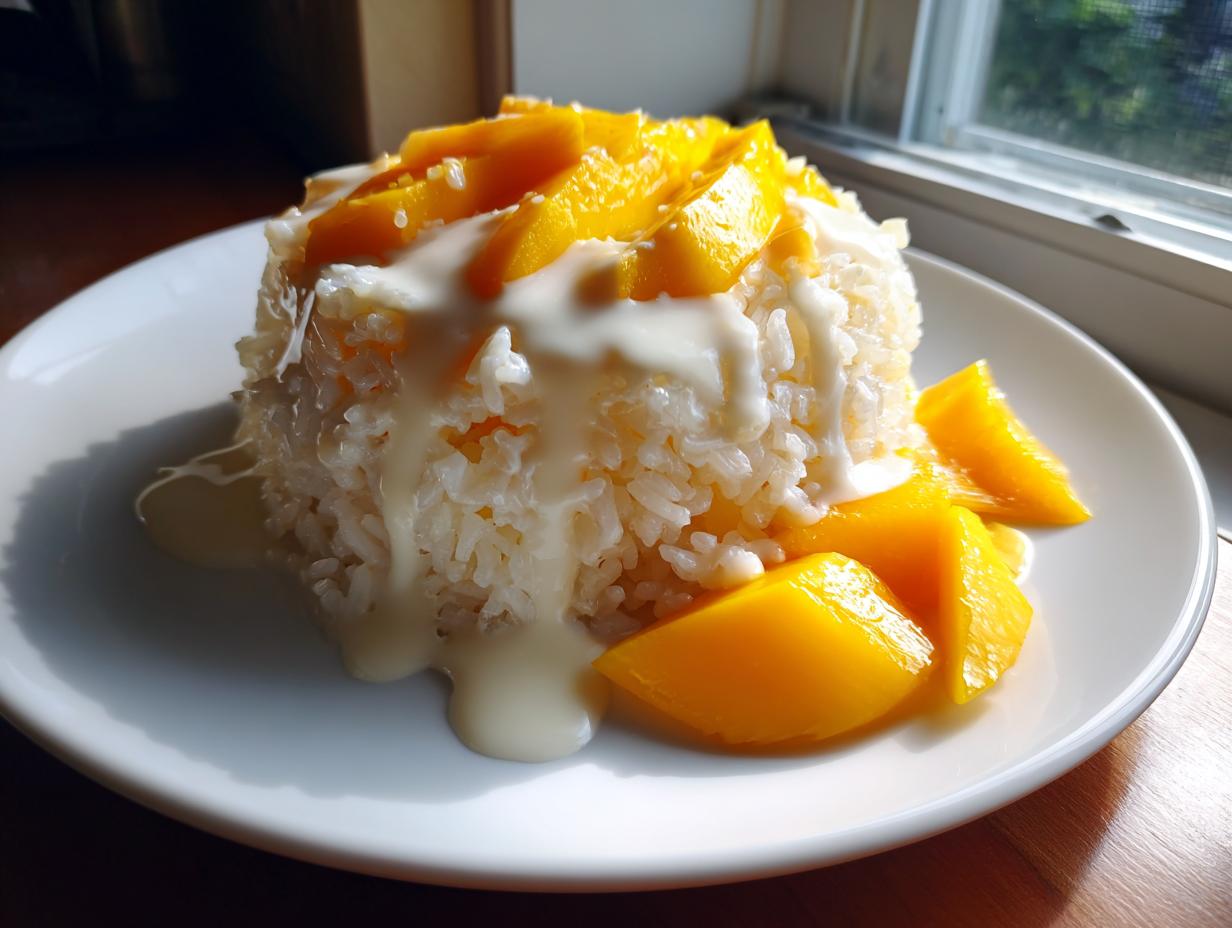
There’s nothing quite like the sunshine of Thailand captured in a single bowl, and that’s exactly what this mango sticky rice delivers. It’s sweet, it’s creamy, and honestly, it tastes like a vacation! When I first tried this tropical asian dessert, I knew I had to master it for my family. We often think authentic means difficult, but this Khao Niew Mamuang is built on simple ingredients—perfectly cooked glutinous rice soaking up the richest coconut sauce you can imagine. You can find wonderfully detailed methods like the one compiled over at this popular resource, but my version keeps things approachable for the everyday cook. Trust me, once you try this homemade version, especially when the mangoes are perfectly ripe, you’ll wonder why you waited so long to make it.
- Why This Thai Mango Sticky Rice Recipe Works (Carla's Experience)
- Ingredients for Homemade Mango Sticky Rice
- How to Make Mango Sticky Rice: Step-by-Step Instructions
- Tips for Success When Making Mango Sticky Rice
- Variations: Vegan Mango Sticky Rice and Gluten Free Thai Dessert Options
- Serving Suggestions for Your Coconut Mango Dessert
- Storage and Reheating Instructions for Leftover Mango Sticky Rice
- Frequently Asked Questions About Mango Sticky Rice
- Share Your Homemade Mango Sticky Rice
Why This Thai Mango Sticky Rice Recipe Works (Carla’s Experience)
When I first tried making this, I had trouble getting that perfect, slightly chewy, tender texture in the rice. It was either hard or just mushy! I realized the secret to any great authentic thai dessert like this isn’t just the mango; it’s the careful treatment of the rice itself. That’s where building trust with your ingredients really comes in. I finally got it right when I stopped rushing the soaking—that long rest time is non-negotiable for true Khao Niew Mamuang. You can see some great tips on the technique over at Omnivore’s Cookbook, which helped me finalize my process.
Perfectly Cooked Glutinous Rice Dessert
For the best glutinous rice dessert experience, you must soak the sticky rice for hours. I know, it’s a commitment! But that soaking softens the grains so they can steam evenly, giving you that wonderful, slightly sticky, but still distinct mouthfeel. Don’t worry too much about rinsing *every last speck* of starch away before soaking; we actually want some of that natural stickiness to develop, even though we rinse it at the beginning to get rid of the dusty coating.
The Creamy Coconut Mango Sticky Rice with Coconut Sauce
The sauce is the second crucial piece of the puzzle for a genuinely wonderful mango sticky rice with coconut sauce. If you just dump all your sauce over the hot rice at once, you end up with soggy rice clinging awkwardly to the bowl. The real trick to an authentic thai dessert is splitting the sweet coconut milk mixture into two parts: one for the rice to absorb while it rests, and a slightly thicker, fresh portion reserved just for drizzling on top right before serving. That double sauce approach makes all the difference in richness!
Ingredients for Homemade Mango Sticky Rice
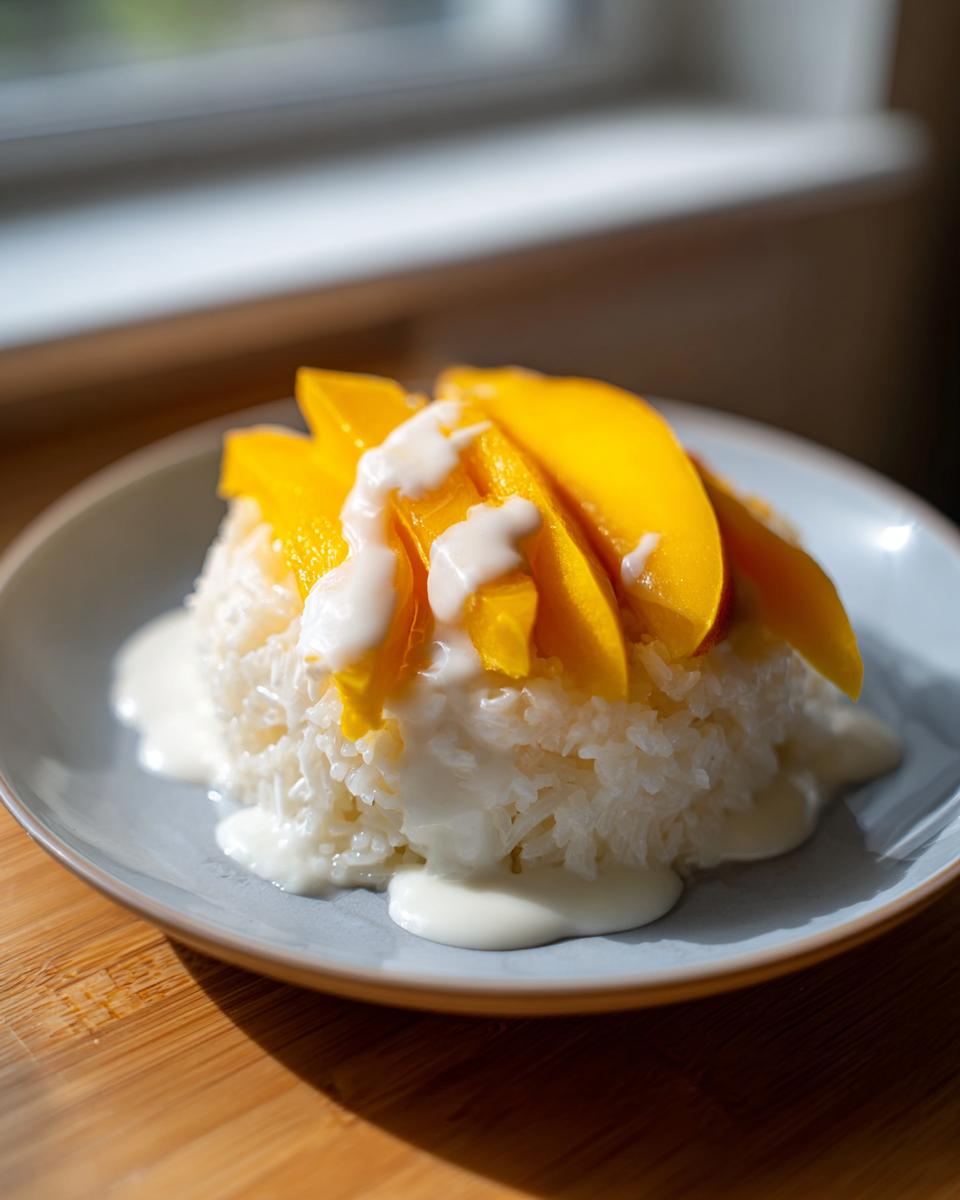
When you gather your ingredients for authentic mango sticky rice, it’s important to be precise, especially with the rice and the coconut milk. You want the best result, and that starts here! For the rice, you absolutely need the glutinous kind—it’s sometimes labeled as sweet rice. Don’t substitute it with regular jasmine rice; the texture just won’t be right for this desserts with sticky rice classic.
For the sauce, please reach for the full-fat coconut milk; we need that unadulterated richness to create the creamiest texture possible when we sweeten it up. For the fruit, using ripe Nam Dok Mai or Honey mangoes makes a huge difference, but honestly, use the sweetest mangoes you can find locally if you can’t source those specific types. Here are the exact quantities I use for a generous four servings of this wonderful sweet sticky rice dessert:
You will need 1 cup of glutinous rice (sweet rice), 1 cup of full-fat coconut milk, ¾ cup of granulated sugar, and ¼ teaspoon of salt for the soaking sauce. Don’t forget two perfectly ripe mangoes. If you want that authentic garnish, keep some sesame seeds or toasted mung beans on hand too!
How to Make Mango Sticky Rice: Step-by-Step Instructions
Okay, now that we have our gorgeous ingredients ready, let’s get cooking! Remember, the majority of the time for this mango sticky rice is hands-off—that soaking time counts as prep time, so plan ahead! We need about four hours minimum, but overnight is just grand for getting that perfect consistency. Let’s dive into the actual cooking process.
Preparing the Glutinous Rice for Mango Sticky Rice
First things first, give that lovely glutinous rice a good rinse under cold water. You’ll need to rinse it until that water starts running pretty clear; try not to stop too early or you’ll wash away all the starch we need! Then, cover it completely with fresh water and let it nap for at least four hours, or better yet, overnight. When it’s time to cook, drain it super well. You can steam it for about 20 to 25 minutes until it’s delightfully tender. If you want an easy mango sticky rice shortcut, I sometimes use my trusty rice cooker—just use a one-to-one water-to-rice ratio, sort of like you would for regular rice, and let it do its thing!
Creating the Sweet Sticky Rice Dessert Sauce
While that rice is steaming away, we make the magic coconut mixture. In a small saucepan, gently warm up one cup of the full-fat coconut milk, your sugar, and salt. This is where you need patience! You are heating it just until the sugar and salt dissolve completely. I cannot stress this enough: *do not bring this mixture to a boil*. If you boil it, the texture of the sauce changes when it hits the hot rice, and we want that smooth, ultimate sweet sticky rice dessert finish. Take it off the heat as soon as everything melts together.
Combining and Resting the Rice
The very second your sticky rice is cooked, transfer it immediately to a bowl that can handle the heat. Now, take about two-thirds of that sweet coconut sauce you just made and pour it right over the hot rice. Gently mix it all together—don’t mash it! Cover that bowl up tightly, maybe with a plate or some plastic wrap, and just let it sit for about 20 to 30 minutes. This rest is essential! The rice needs that time to completely soak up all those creamy, sweet, salty flavors. This absorption step is what guarantees the perfect texture for your incredible mango sticky rice.
By the way, if you need a good savory recipe to balance out all this sweetness, you should check out my favorite chicken gravy recipe sometime! But for now, let that rice rest. We’ll prepare the final drizzle sauce and slice those beautiful mangoes next. You can find another lovely, detailed method for this process over at Easy Meals Table!
Tips for Success When Making Mango Sticky Rice
Even with perfect measurements, little things can trip you up when making something as nuanced as mango sticky rice. As a teacher, I always tell my readers: don’t panic if it looks a little strange at first! Success here comes down to the mangoes and the final drizzle adjustments. I’ve learned these tricks over the years—lessons that save you from sad, underripe fruit or a sauce that’s too thin.
First, let’s talk about the star, the mango. This isn’t the place for firm, tart mangoes! You want sweetness—that’s the point of this coconut mango dessert. Look for varieties like Honey or Ataulfo if you can find them, like the ones recommended in that helpful guide at Easy Meals Table. The fruit should give just slightly when you press it gently, and it should smell wonderfully fragrant near the stem end. If it smells like nothing, it will taste like nothing, trust me!
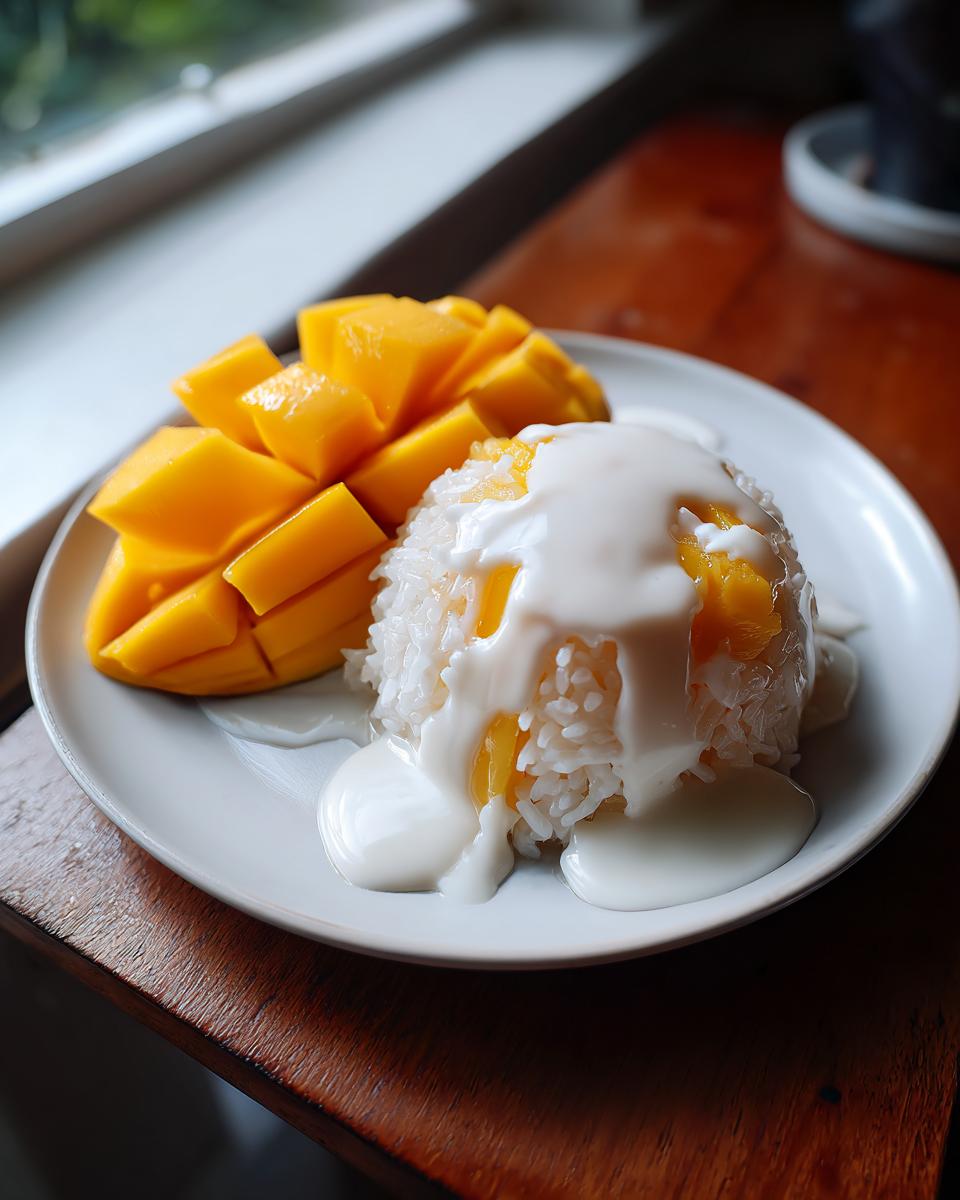
Next up is that second sauce—the drizzle. Remember how we set aside about one-third of the coconut milk mixture? After you let the rice soak up the main batch, you need to gently reheat that reserved portion. I usually add just a tiny bit more sugar and salt to this top layer because it won’t mix into the rice itself. It needs to be just thick enough to coat a spoon nicely when drizzled but thin enough to flow. If it seems too thin, just let it simmer on the absolute lowest heat for just a minute or two until it thickens slightly. If you accidentally add too much sugar to the main soaking sauce, the rice can get sticky in a bad, gluey way. A little extra dissolved sugar in the topping sauce helps balance that out beautifully.
Also, don’t forget that a good, fluffy base helps the final dish sing! If you’re looking for other reliable recipes to practice your kitchen patience with, I just posted my favorite instructions for fluffy pancakes that use a similar gentle folding method. Happy cooking!
Variations: Vegan Mango Sticky Rice and Gluten Free Thai Dessert Options
When I teach a recipe, I always want to make sure everyone at the table can enjoy the meal, and that’s why I love this particular dish so much! The great news is that you don’t have to do much work at all to make this a crowd-pleaser for different diets. This recipe for mango sticky rice is naturally **vegan mango sticky rice** because we only use coconut milk, sugar, fruit, and rice—no dairy or animal products needed anywhere!
It’s also wonderful for folks needing a gluten free thai dessert option. Since rice is the base, it fits perfectly into a gluten-free lifestyle. I know many of you look for ways to make classic comfort foods accessible, and that’s why I try to keep my foundational recipes as flexible as possible. If you are looking for other great vegan ideas, maybe try those no-bake protein bars I shared last month!
Now, while authenticity is important, I always encourage a little tinkering if it brings you joy! For a little twist on that sweet coconut sauce—though traditionalists might not approve—I have occasionally added just a *tiny* splash of pure vanilla extract right before adding the sauce to the rice. It doesn’t taste overtly vanilla, but it adds a lovely background warmth that pairs beautifully with the mango. You can also experiment with garnishes besides the traditional toasted mung beans or sesame seeds. Crunchy toasted coconut flakes work wonderfully if you want an extra layer of tropical flavor!
For those curious about vegan versions specifically, you can see a dedicated take on it by checking out Elavegan. But honestly, for this incredible dessert, sticking to full-fat coconut milk yields the best creamy result, and you won’t miss anything else!
Serving Suggestions for Your Coconut Mango Dessert
The final performance! Making the perfect mango sticky rice is only half the battle; presenting it beautifully is the other half. This coconut mango dessert is meant to look as irresistible as it tastes, and thankfully, it’s naturally photogenic. You don’t need fancy plating skills, just a little attention to arrangement.
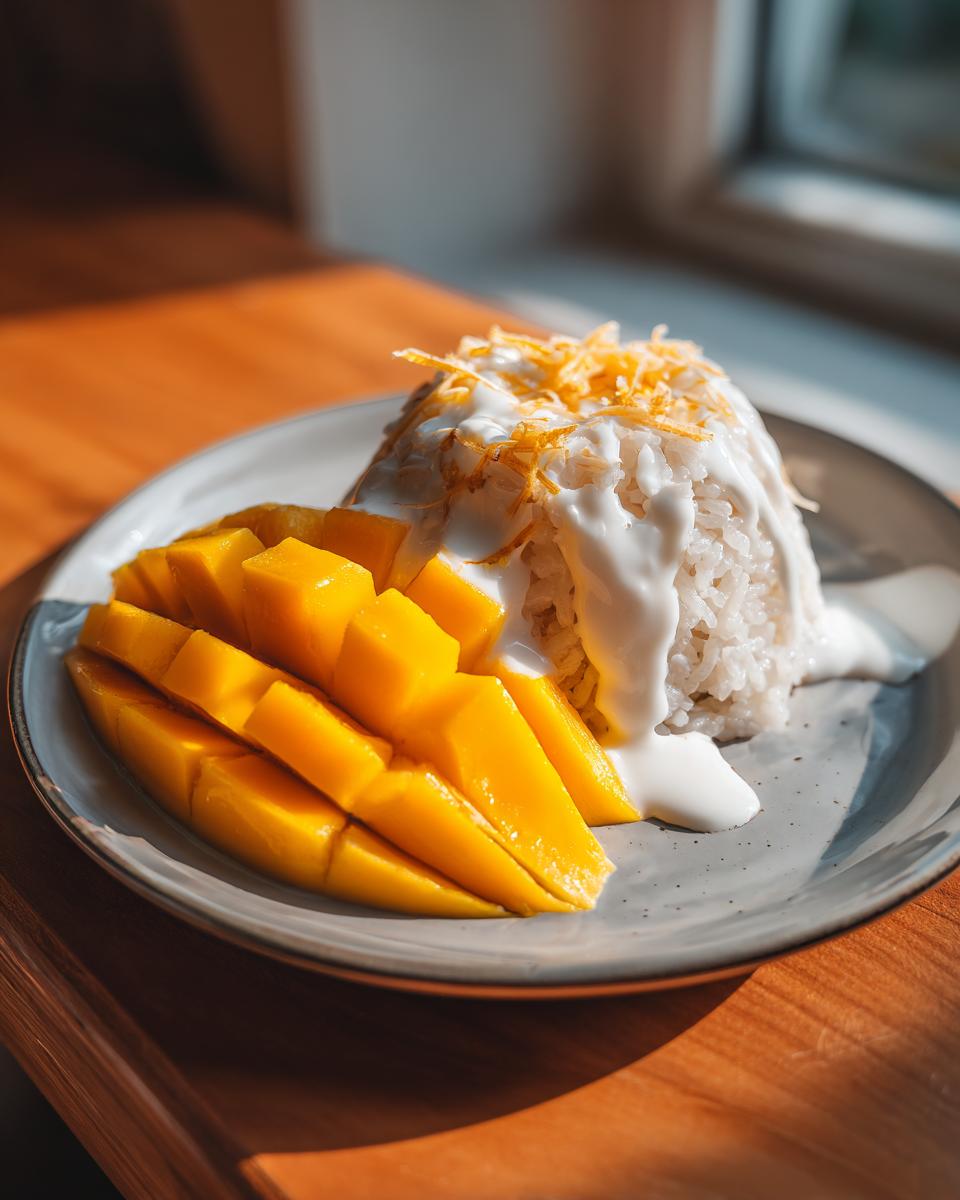
When I serve this at home, I always use a shallow, slightly wide bowl or even a flat plate. First, spoon a generous portion of that creamy, warm sticky rice slightly off-center. Don’t pack it down too much; we want it to look soft and inviting. Next, take your beautiful, sliced mango cheeks and arrange them artfully next to the rice, or drape them gently right over the top edge. It should look generous and overflowing with tropical joy.
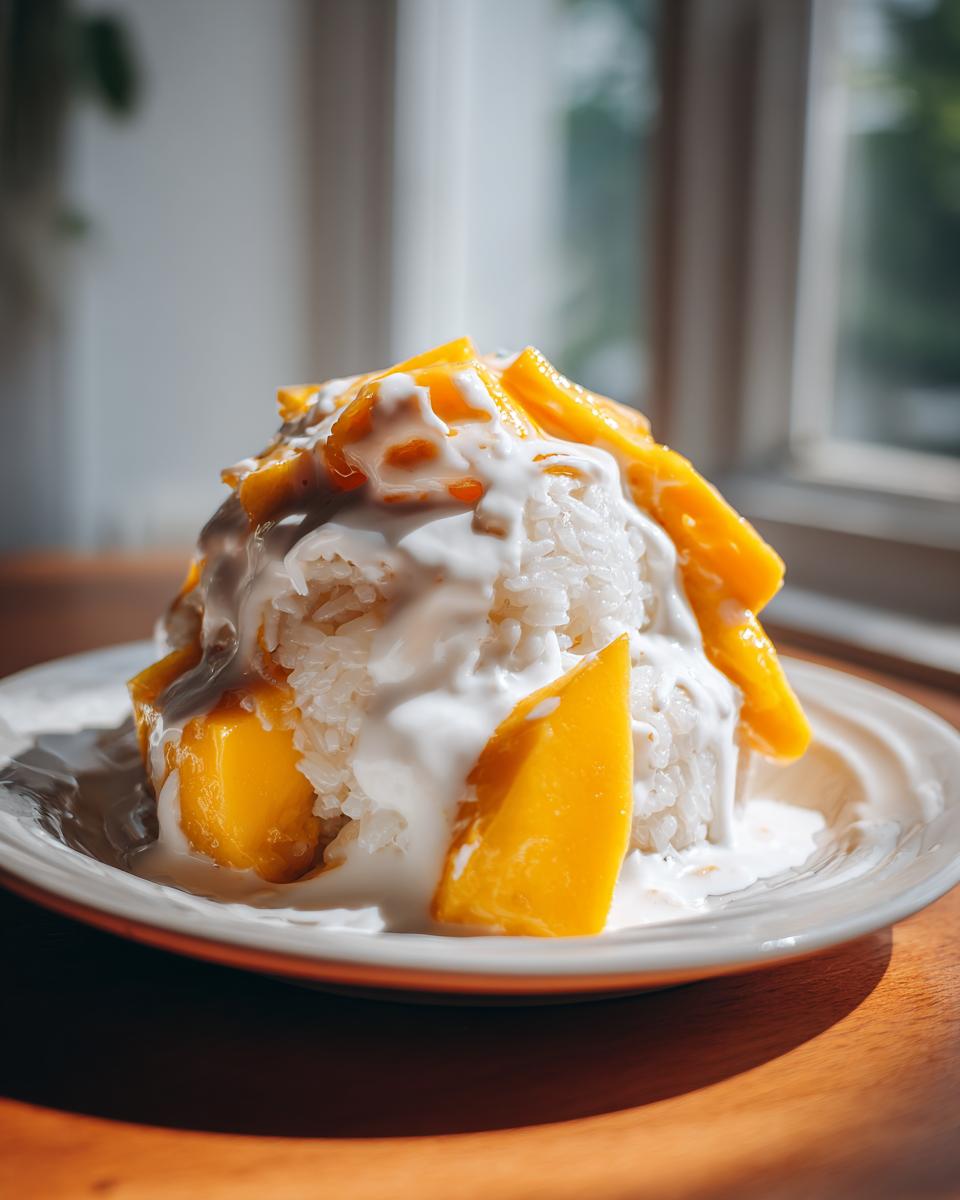
Now for the magic drizzle! Take that reserved, thicker coconut sauce—the one we kept separate—and drizzle it slowly over the rice. Don’t drown it; just enough to make it look glossy and luxurious. Finally, this is where those garnishes really shine. A little sprinkle of toasted white sesame seeds adds a lovely warm crunch and contrast. If you happen to have toasted mung beans (which are traditional and offer a wonderful salty crunch), use those! They look beautiful scattered over both the rice and the mango. It’s simple, elegant, and showcases every component perfectly.
If you’re ever looking for a savory item to serve alongside this beautiful dessert for a neighborhood gathering, I hope you’ll take a peek at my simple homemade mayonnaise recipe—it’s a great starting point for homemade dips and sauces!
Storage and Reheating Instructions for Leftover Mango Sticky Rice
It’s rare that we have leftovers of this mango sticky rice at my house—usually, it disappears the moment it hits the table! But if you’re lucky enough to have some delicious sweet sticky rice dessert remaining, storing it correctly is key because the rice and the mango behave very differently.
This is one of those desserts where you absolutely must treat the components separately. Never store the mango slices mixed in with the coconut-soaked rice. The moisture from the sauce will turn the mango mushy, and trust me, nobody wants that gummy texture!
Storing the Rice and Mango Separately
For the rice, scoop the leftover sticky rice into an airtight container. It’s best to try and use this within two days for the best texture, but it will keep for three if tightly sealed. Now, for the mangoes, peel any remaining slices, pat them dry gently, and store them in a separate small, sealed container in the fridge. Mangoes are delicate, so keeping them away from that wet rice mixture preserves their sweet, firm bite.
Reheating the Coconut Sticky Rice
When you’re ready to enjoy your leftovers, the reheating process is all about bringing back that soft, fluffy texture that the coconut sauce gave it initially. You don’t want to dry it out! The best way, in my opinion—and this is a real home cook trick—is to use a little bit of steam. Place the rice in a steamer basket over simmering water for just four or five minutes. That gentle heat wakes the grains right back up.
If you are in a hurry, the microwave works just fine, but you have to cheat a little bit. Put the rice in a microwave-safe bowl and sprinkle maybe a teaspoon or two of plain water or a splash of fresh coconut milk over the top, then cover it loosely with a damp paper towel. Microwave it in short 15-second bursts, stirring between each, until it’s warm through. This prevents it from turning into a solid block of sweet rice!
Once the rice is warm, plate it up, add your fresh mango slices (remember, the mango stays cold!), and finish it with a fresh drizzle of that reserved coconut sauce you hopefully saved. It tastes almost as good as the first batch!
Frequently Asked Questions About Mango Sticky Rice
I always get so many wonderful questions after I share a recipe, and this delicious mango sticky rice is certainly no exception! It’s natural to wonder about substitutions or how to speed things up when you’re short on time. I’ve gathered the most common things folks ask me about when they’re trying to figure out how to make mango sticky rice successfully at home. Don’t feel shy asking these things—even I had to learn these lessons the hard way!
Can I use regular white rice instead of glutinous rice for this mango sticky rice recipe?
Oh, I get this one often! And here’s my honest answer: You sure *can* use regular white rice, like Jasmine rice, but then it’s just not Khao Niew Mamuang anymore, is it? Regular rice absorbs liquid differently, and you won’t get that signature thick, tender, slightly chewy texture that we look for in an authentic thai dessert. The whole appeal of this dish rests on the starchiness of the glutinous rice taking on that sweet coconut sauce. If you use standard rice, it will end up tasting more like a sweet rice pudding, which is tasty in its own right, but it misses the specific textural joy of the original khao niew mamuang recipe.
What is the best way to get truly ripe mangoes?
This is so important! You can have the best coconut sauce in the world, but if your mangoes aren’t right, the whole dessert falls flat. Forget what the outside color is telling you sometimes—especially with store-bought mangoes. The real secret is using your nose and your hands! A truly ripe mango will have this lovely, sweet, tropical fragrance near the stem area. If it smells like nothing, it will taste like nothing once you slice it. Also, gently press the cheek of the mango—it should yield just a tiny bit, like a perfectly ripe peach, but it shouldn’t feel mushy or soft. If it’s rock hard, it won’t be sweet enough for your coconut mango dessert. If you’re in a major pinch and can’t find ripe ones, maybe look for a quick mango sticky rice recipe that uses slightly firmer mangoes and sweetens the sauce up extra strong, but fresh and fragrant is truly what we aim for!
If you want to learn more about how I approach simple, honest cooking techniques in general, you can always read a bit more about my philosophy over on my About Page. Happy to have you here in the kitchen with me!
Share Your Homemade Mango Sticky Rice
Well, friend, that’s it! You’ve made the most wonderful, luscious mango sticky rice. I truly hope the kitchen smells like a tropical paradise right now! Now that you’ve mastered the gentle art of soaking and saucing, I really, really want to hear all about it. We are building a community here, and your photos and notes help everyone else feel confident enough to try this amazing coconut mango dessert!
Please take a moment to leave a star rating. Was the texture of the rice exactly what you dreamed of? Did your coconut sauce soak in perfectly during that resting period? I look forward to reading every single comment.
- Did you manage to find those traditional Nam Dok Mai mangoes, or did you use a local favorite?
- Did you stick to my method, or did you try the quicker rice cooker trick for your quick mango sticky rice?
- What did you choose for the garnish—the classic toasted mung beans or just simple sesame seeds?
If you snap a picture of your beautiful platter, tag me on social media—I love nothing more than seeing my recipes come to life in your home! And if you have any lingering questions that weren’t covered above, don’t hesitate to hop over to my Contact Page, and we can chat.
For those of you who adored this recipe and want to explore other delightful Thai sweets—I saw a really gorgeous-looking recipe for a similar preparation over at Joyous Apron that you might enjoy checking out next time! Thank you so much for cooking with me today!
PrintAuthentic Thai Mango Sticky Rice (Khao Niew Mamuang)
Make this classic Thai mango sticky rice dessert using sweet glutinous rice, ripe mangoes, and a rich, creamy coconut sauce. This recipe is naturally gluten-free and vegan.
- Prep Time: 4 hours (includes soaking time)
- Cook Time: 30 min
- Total Time: 4 hours 30 min
- Yield: 4 servings 1x
- Category: Dessert
- Method: Steaming/Soaking
- Cuisine: Thai
- Diet: Vegan
Ingredients
- 1 cup glutinous rice (sweet rice)
- 1 cup coconut milk (full fat for best results)
- ¾ cup granulated sugar
- ¼ teaspoon salt
- 2 ripe mangoes (Nam Dok Mai or Honey variety recommended)
- Sesame seeds or toasted mung beans for garnish (optional)
Instructions
- Rinse the glutinous rice thoroughly under cold water until the water runs clear. Soak the rice in water for at least 4 hours, or preferably overnight. Drain the soaked rice well.
- Steam the drained rice for 20 to 25 minutes until tender and cooked through. Alternatively, you can cook it in a rice cooker using the same amount of water as you would for regular rice, or follow your rice cooker’s specific instructions for sticky rice.
- While the rice cooks, prepare the sweet coconut sauce. In a small saucepan, combine 1 cup of coconut milk, sugar, and salt. Heat over medium-low heat, stirring until the sugar and salt dissolve completely. Do not boil.
- Once the rice is cooked, transfer it to a heatproof bowl. Pour about two-thirds of the warm coconut sauce over the hot rice. Stir gently to combine. Cover the bowl tightly and let it sit for 20 to 30 minutes to allow the rice to absorb the liquid fully.
- Prepare the remaining coconut sauce for drizzling. In the same saucepan, combine the remaining one-third of the coconut milk with 1 tablespoon of sugar and a pinch of salt. Heat gently until dissolved. This is your topping sauce.
- Peel and slice the ripe mangoes.
- To serve your mango sticky rice, place a portion of the sweet sticky rice on a plate. Arrange the sliced mango next to or on top of the rice. Drizzle the reserved, slightly thicker coconut sauce over the rice. Garnish with sesame seeds or toasted mung beans, if using.
Notes
- For a quick method, you can cook the soaked rice in a rice cooker. Use a 1:1 ratio of rice to water.
- This dessert is naturally gluten-free.
- Use full-fat coconut milk for the creamiest sauce texture.
- Select mangoes that are sweet and soft but still hold their shape when sliced.
Nutrition
- Serving Size: 1 serving
- Calories: 450
- Sugar: 35g
- Sodium: 180mg
- Fat: 18g
- Saturated Fat: 16g
- Unsaturated Fat: 2g
- Trans Fat: 0g
- Carbohydrates: 70g
- Fiber: 3g
- Protein: 6g
- Cholesterol: 0mg