

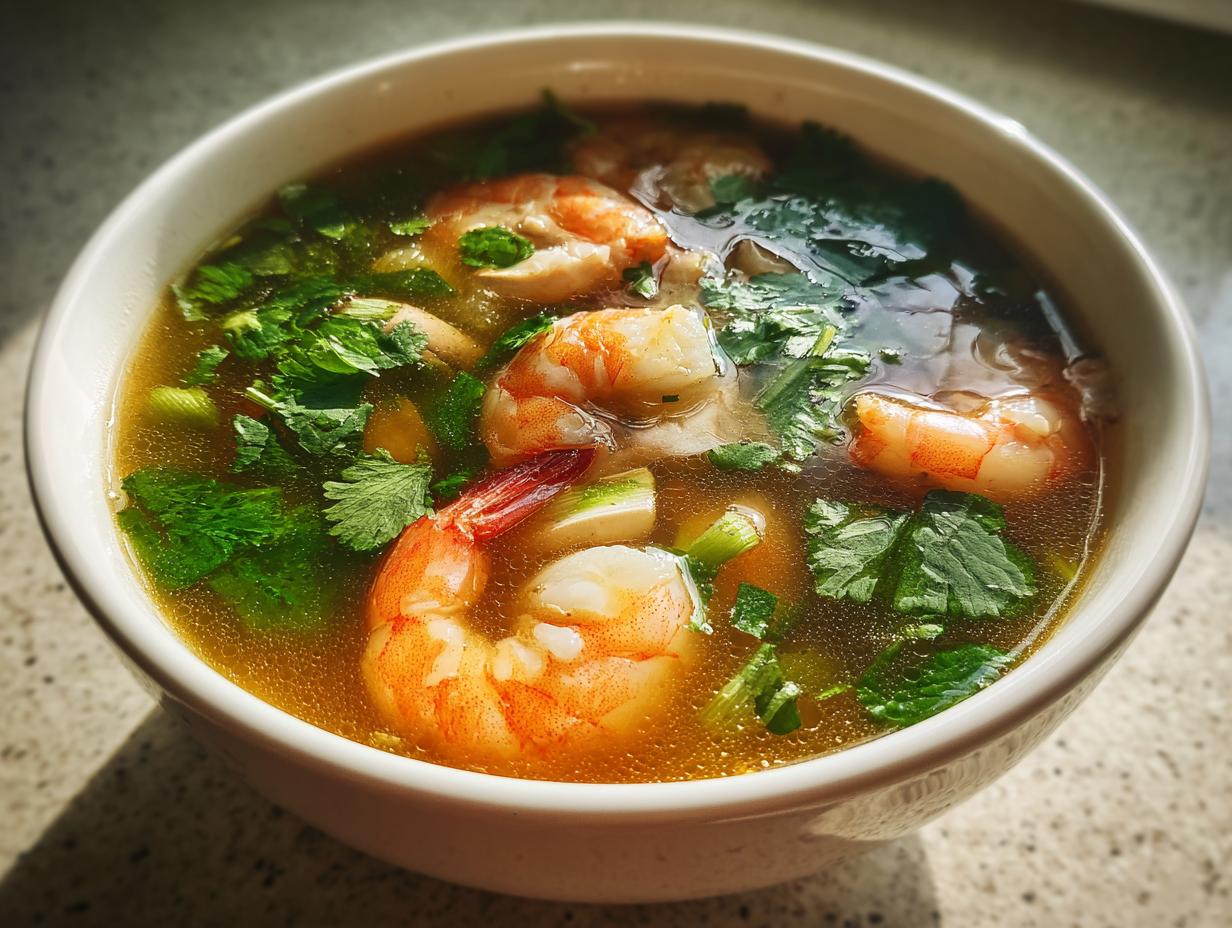
Oh, when that savory, zesty aroma hits you, there’s nothing quite like it, is there? That moment when you realize you’re breathing in the essence of Thailand right in your own kitchen! I know getting that perfect, vibrant punch of flavor can feel intimidating, but trust me, making restaurant-quality tom yum soup at home is absolutely achievable, even on a busy night. This recipe focuses on my favorite clear broth style, giving you that fantastic hot and sour punch without any fuss at all. You know, after thirty years of teaching kids how to read, I learned a thing or two about breaking down a process into easy, clear steps, and that’s exactly what I’m doing here for this amazing soup. If you’ve ever wondered how to manage a great hot and sour soup, this recipe is your perfect starting point. We’re going to build those deep, authentic layers of flavor together!
- Why This Authentic Thai Soup Recipe Delivers True Flavor
- Gathering Ingredients for Your Tom Yum Goong
- How to Prepare Authentic Tom Yum Soup Step-by-Step
- Tips for Success Making Homemade Spicy Soup
- Variations on Classic Tom Yum Soup
- Serving Suggestions for Your Quick Thai Soup
- Storage and Reheating Instructions for Tom Yum Soup
- Frequently Asked Questions About Tom Yum Soup
- Share Your Tom Yum Soup Creations
Why This Authentic Thai Soup Recipe Delivers True Flavor
The reason this tom yum soup tastes just like the best Thai restaurants is that we don’t cut corners on the core aromatics. It all comes down to coaxing incredible flavor out of just a few really important components. When you use these fresh, potent ingredients, you don’t need a whole pile of things to make the broth sing!
If you’re looking for that signature punch of flavor that makes this dish famous, check out this site for some great insights into making authentic Thai Tom Yum Goong Soup Easily.
The Balance: Hot and Sour Soup Perfection
For any truly great tom yum soup, you have to nail the holy trinity: heat, sourness, and salt. We hit the heat with crushed chilies, the sourness with fresh lime juice—that’s why we add it right at the end! And the saltiness comes from just the right whisper of fish sauce. This recipe focuses on the bright, clear broth; it lets those herbs shine. If you wanted it richer, you could add milk later, but for the classic experience, keeping it clear is the way to go.
Essential Aromatic Asian Soup Herbs
These are the superstars that separate a good soup from a truly authentic one. Don’t skip these if you want that real Authentic Asian Soup profile!
- Lemongrass: This brings a bright, almost citrusy perfume. We bruise it first to help it release all that lovely essential oil into the simmering broth.
- Galangal: Think of it like ginger’s sophisticated cousin—it’s sharper and has this wonderful piney, citrus note that is non-negotiable for real tom yum soup flavor.
- Kaffir Lime Leaves: Wow, these leaves smell incredible! Tearing them slightly wakes them up before they steep, giving the soup that unmistakable zesty fragrance.
Gathering Ingredients for Your Tom Yum Goong
Okay, now for the fun part: gathering our flavorful arsenal! Getting these ingredients ready ahead of time makes the cooking process almost a breeze. Since this is a fast-cooking soup, having everything prepped, or what we call *mise en place*, is key so you don’t miss that perfect moment when the shrimp go in!
Here is what you’ll need for about four generous bowls of our amazing shrimp soup:
- 6 cups chicken or vegetable broth
- 1 pound large shrimp, peeled and deveined
- 2 stalks lemongrass, trimmed and bruised
- 4 slices galangal (or ginger if galangal is unavailable, see below!)
- 4 kaffir lime leaves, torn
- 2-3 Thai chilies, crushed (adjust to your heat preference, don’t be shy!)
- 1/2 cup straw mushrooms, halved
- 3 tablespoons fish sauce
- 3 tablespoons fresh lime juice
- 1 teaspoon sugar
- 1/4 cup fresh cilantro, chopped, for garnish
Ingredient Notes and Substitutions for Tom Yum Soup
A few words of advice from my kitchen to yours about some of these specialty items for your **tom yum soup**.
First, that lemongrass? You need to use the pale, bottom third of the stalk. Take a heavy knife or a rolling pin and give the stalks a good whack—that’s what we mean by bruising them! It physically cracks the fibers open so they can release that gorgeous perfume into the broth when they simmer.
Next, about the galangal. If you are truly hunting for the most authentic flavor, you should seek out galangal. It’s earthy and light, not nearly as sharp as ginger. Now, I totally understand that sometimes stores don’t carry it! If you absolutely cannot find galangal for your tomyum soup, ginger is okay in a pinch, but just use maybe half the amount, as ginger is much stronger and sharper.
For this recipe, we are focusing on shrimp, which makes it Tom Yum Goong. I always buy them shell-on and peel them myself, but if you buy them pre-peeled, just make sure you go back through and pull out that little dark vein—that’s the trick to a clean flavor profile in your Homemade Spicy Soup!
How to Prepare Authentic Tom Yum Soup Step-by-Step
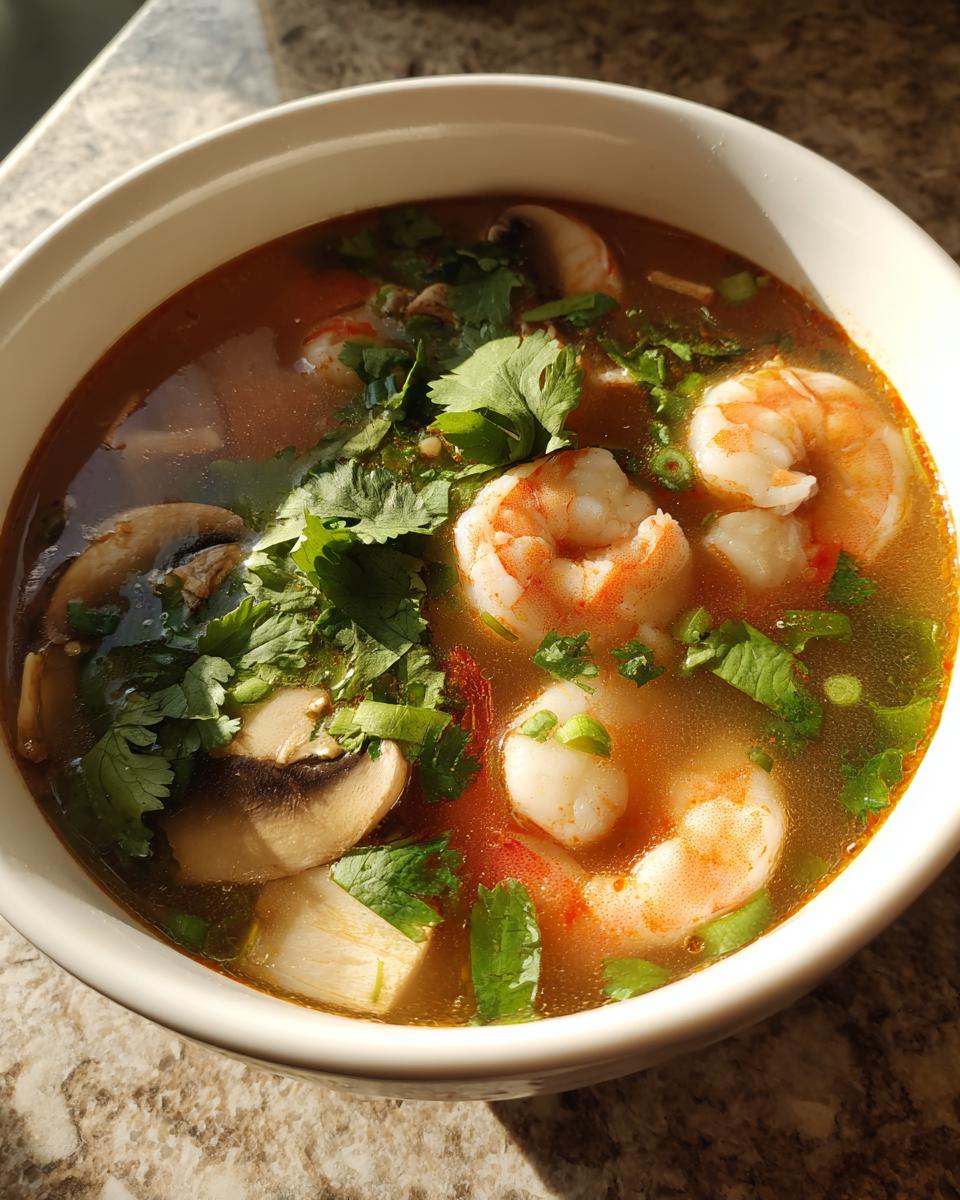
This is where the real magic happens, and honestly, it moves so fast you’ll barely believe you’ve made a restaurant-quality dish in under 35 minutes! The whole process is really just about getting the broth ready, adding the quick-cooking bits, and then seasoning at the very end. Don’t feel rushed, though; even when making this quick Thai soup, pausing for flavor is important!
I always set out mugs ready for serving, measure out my lime juice and fish sauce, and have the shrimp waiting on ice, because once we start cooking, we need speed. If you want a deeper dive into the cooking technique for this type of soup, this guide on Authentic Tom Yum Shrimp Soup is really helpful for timing!
Building the Flavor Base for Your Tom Yum Soup
We start by pouring your broth—chicken or veggie, it’s your choice—into the pot and getting it nice and warm over medium heat until it’s just simmering. Remember those aromatic herbs we talked about? Toss in those bruised lemongrass stalks, the galangal slices, those torn kaffir lime leaves, and your crushed Thai chilies. This next part is non-negotiable if you want that wonderful Authentic Asian Flavor Profile in your tom yum soup—let this mixture simmer gently for a full 10 minutes. Seriously, don’t rush this! This slow infusion is what extracts all the complex, fragrant oils and creates the Best Tom Yum Broth you’ve ever tasted. It prepares the stage for everything else.
Final Seasoning Adjustments for Zesty Lime Soup
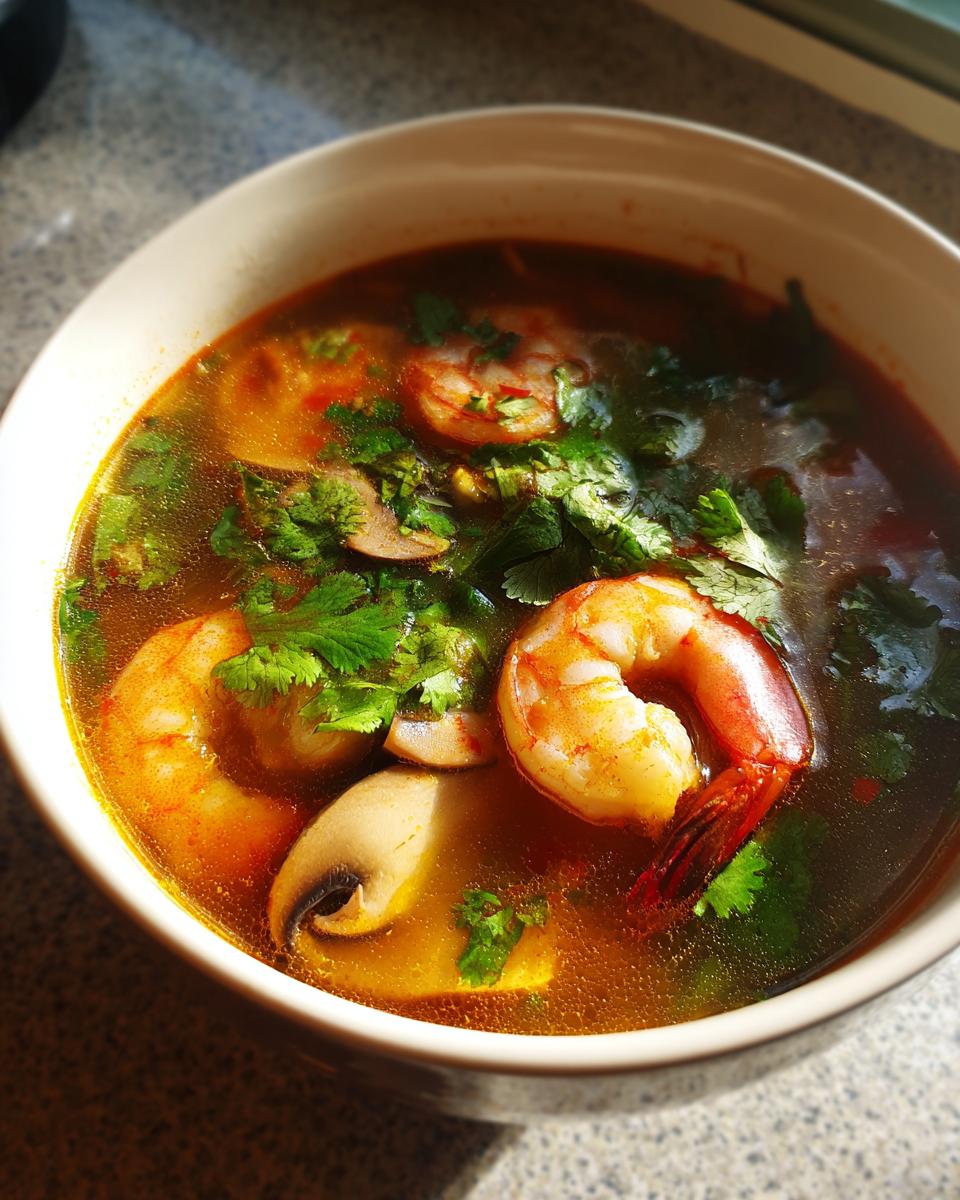
Once the broth is fragrant, toss in your mushrooms and let them cook for two minutes. Then, add the shrimp. They cook so fast! As soon as they turn pink and opaque—that’s usually 2 or 3 minutes—you need to pull the pot completely off the heat. This prevents them from getting tough, which is a big no-no! Now, take the time to scoop out the lemongrass, galangal, and lime leaves; we’ve used them for flavor, but they’re too tough to eat! With the heat off, stir in your fish sauce, sugar, and that bright, fresh lime juice. This is where you taste it, really taste it. Is it sour enough? Salty enough? Adjust it now until you have that perfect, balanced zesty lime soup. That final tweak is what makes your tom yum soup uniquely yours!
Tips for Success Making Homemade Spicy Soup
I’ve made enough pots of tom yum soup in my kitchen to know exactly where things can go sideways if you’re not paying attention! Since I spent so many years teaching kids, I know that the clearest instructions save the most headaches later. These tips are about keeping that delicate balance we’ve worked so hard to build.
Preventing Overcooked Shrimp Every Time
Shrimp are the fastest cooks in the world, and if you leave them in hot liquid for even a minute too long, they turn rubbery. And nobody wants that in their beautiful, aromatic soup! My number one rule for beautiful tom yum soup is to ALWAYS add the shrimp when the pot is already off the heat, or as soon as you take it off. They only need about two to three minutes to turn that perfect pink color. They’ll actually keep cooking slowly in the residual heat, which is exactly what we want for tender results. I even sometimes poach the shrimp separately on the stove and just drop them into the hot broth right before serving—pure gold!
Keeping Your Broth Clear and Bright
When you see restaurant-quality tom yum soup, it’s usually this clear version, not cloudy. That cloudiness happens when you either add milk too early or you boil too vigorously after adding the protein. Remember how we took the pot *completely* off the heat before adding the fish sauce and lime juice? That’s crucial for keeping it clear and for preserving that bright lime flavor. If you boil the lime after adding it, the flavor gets dull, and it can sometimes curdle the broth slightly. Stick to a gentle simmer just to heat the final additions through, not a rolling boil. This also makes it an excellent easy Thai dinner idea because you aren’t fussing with high heat for long!
Don’t Forget to Remove the Flavorings!
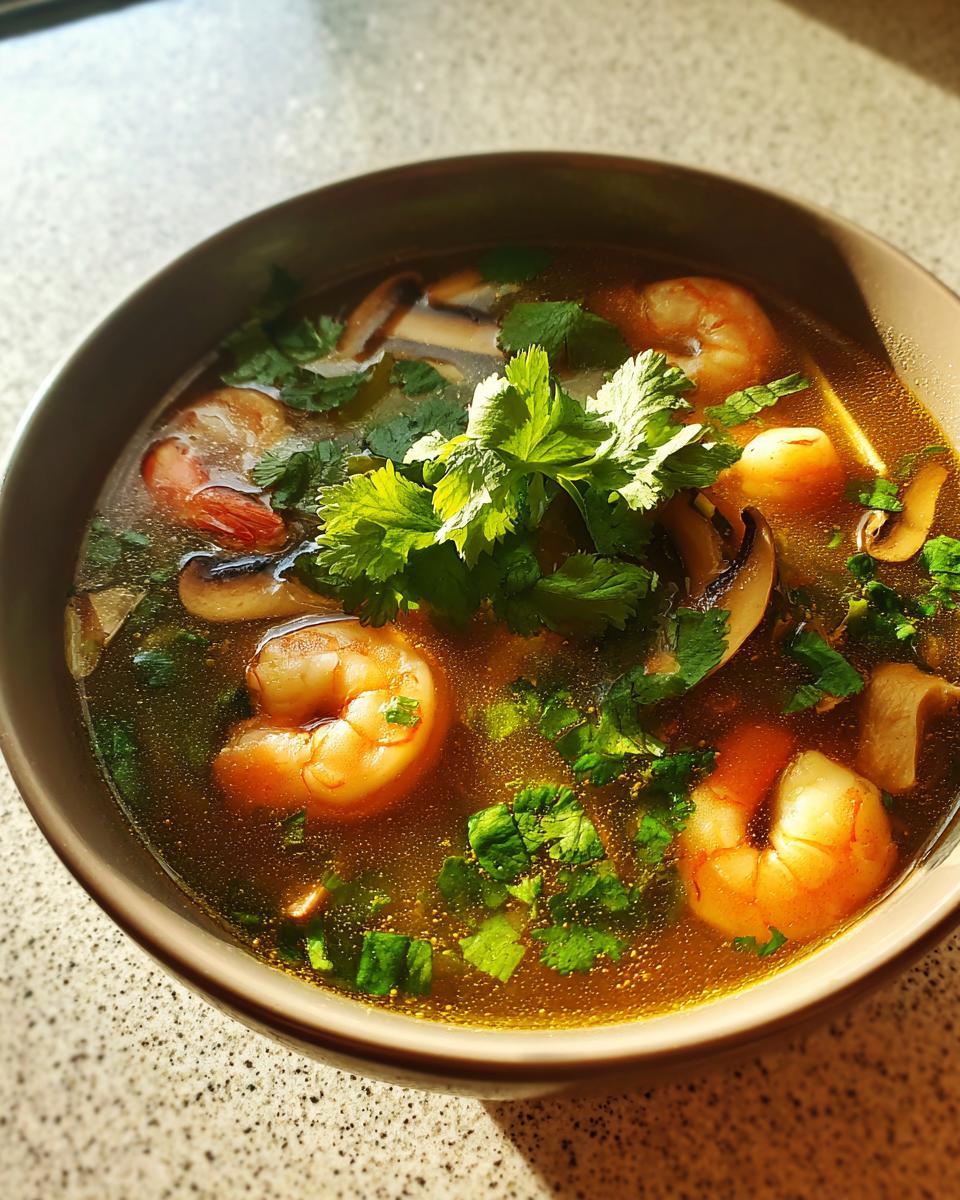
I can’t stress this enough—those herb stalks are flavor bombs, not vegetables meant for munching! Lemongrass, galangal, and kaffir lime leaves have done their job infusing that gorgeous flavor during the 10-minute simmer. If you forget to dig them out before serving, your guests will end up with tough, woody bits in their spoons, and that interrupts the whole wonderful experience of eating this Homemade Spicy Soup. Take a minute, fish them out, and then go ahead and season your soup. It’s the final step before plating up your perfect Zesty Lime Soup.
If you are curious about how other chefs handle the heat level in their broth, you might get some great inspiration from checking out what they recommend for the Very Best Tom Yum recipes!
Variations on Classic Tom Yum Soup
Now, I know this recipe is for the classic, vibrant, clear Tom Yum Goong, but sometimes you need a little something different, right? Just like how I have different recipes for holidays versus a quick Tuesday night, you can easily tweak this base. It’s wonderful that one flavorful foundation recipe can give you so many different options for Thai Comfort Food!
If you are craving noodles for a fuller meal, or maybe you want that comforting creamy texture, don’t worry! We can absolutely adapt this recipe. For more inspiration on quick, hearty meals, take a peek at my recipe for Easy Chicken Pozole.
Making Flavorful Chicken Soup Thai Style
If shrimp just isn’t fitting the bill for your tom yum soup tonight, chicken is such a wonderful swap. You’ll want to take thin slices of boneless, skinless chicken breast—slicing them thin means they cook evenly and stay tender. Go ahead and add the chicken right after you add the mushrooms, keeping the broth simmering gently. Because chicken takes a little longer to cook than shrimp, you might need to let those slices simmer for about 4 to 5 minutes until they are cooked through. Once they are done, pull the pot off the heat just like we did with the shrimp, and finish seasoning with the lime and fish sauce. It makes for a truly satisfying and flavorful Spicy Tom Yum Noodle Soup base if you decide to add noodles later!
Creating a Vegan Tom Yum Alternative
Oh yes, we absolutely need a great Vegan Tom Yum Alternative! The main thing we have to replace is the depth of flavor from the fish sauce. That savory saltiness is tough to mimic perfectly, but we can get really close! Instead of fish sauce, you can use a good quality soy sauce, or, even better if you can find it, look for a vegan fish sauce substitute. Start with just two tablespoons of whatever you choose, and remember that you have to add the lime and sugar in the end, too. You’ll also need to use vegetable broth as your base, of course. If you want to bulk up the soup to make it a main course, adding extra hearty mushrooms or tofu cubes works perfectly in place of the shrimp in your tom yum soup base!
Serving Suggestions for Your Quick Thai Soup
Now that you’ve got this incredibly bright, flavorful, and zesty tom yum soup ready to go, the big question is: what do we put with it? Because this soup is so intensely flavored—it hits hot, sour, and salty all at once—you want accompaniments that don’t compete, but rather soak up that amazing broth!
For me, the best way to enjoy this soup is when it feels substantial. If you didn’t add noodles during the cooking process, you absolutely have to serve it over a bed of steamed rice. Plain, fluffy white rice is just heavenly. It soaks up every last drop of that spicy, aromatic broth, and honestly, once you start eating it this way, you’ll never want to eat this soup any other way. I even keep a batch of my Mediterranean Rice with Yellow Pine Nuts on hand, though the plain version lets the soup really shine brightest.
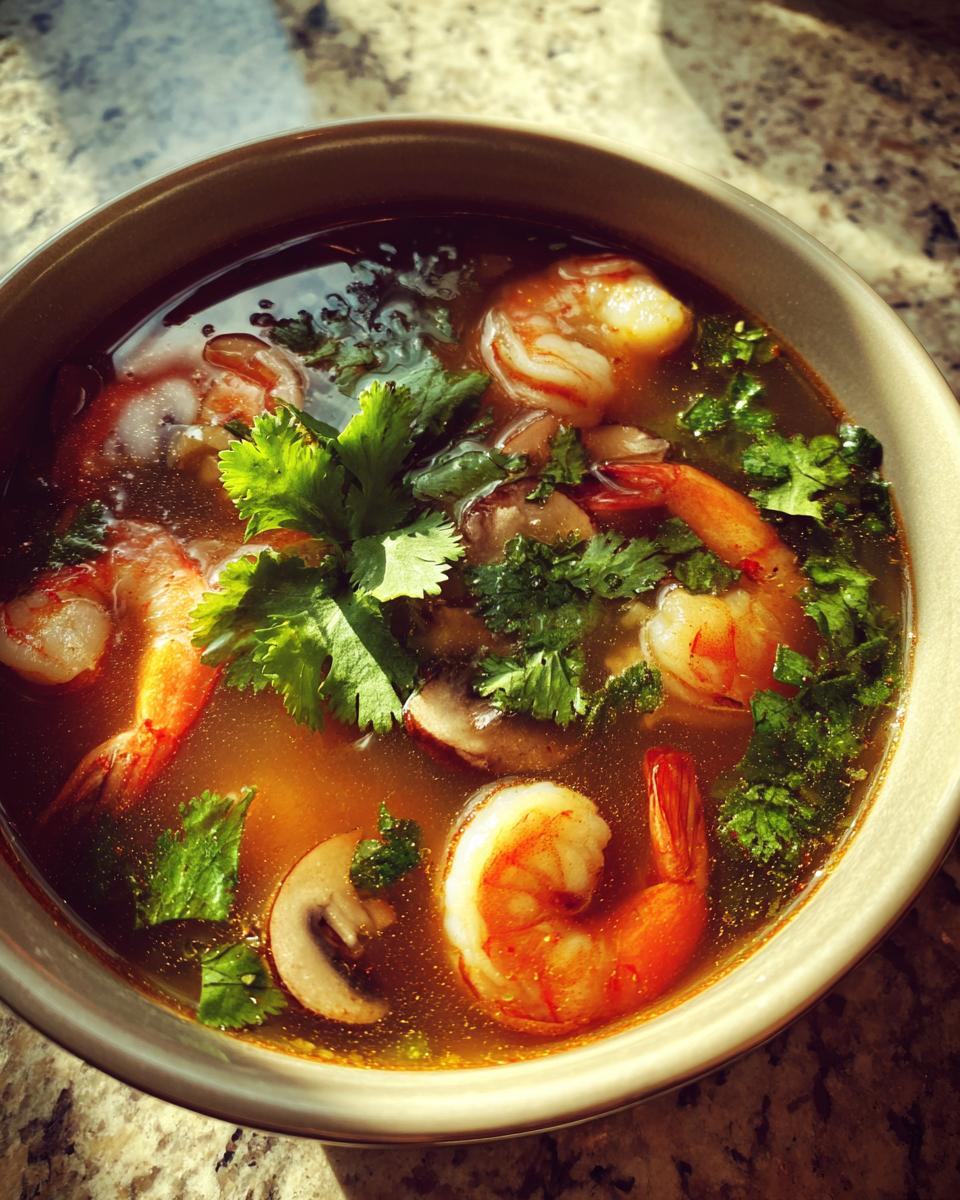
If you want a little something on the side, skip anything too heavily seasoned. A simple plate of sliced cucumber or a light, crisp green salad dressed with just a tiny bit of lime juice and salt keeps the meal feeling super fresh. That little bit of cool crunch is a wonderful contrast to the heat of your tom yum soup. Remember, this soup is already packed with that powerhouse flavor, so let the bowl do the heavy lifting!
Storage and Reheating Instructions for Tom Yum Soup
Even the most amazing tom yum soup is often even better the next day, but you have to store it right! That intense, delicate balance of lime and chili is fragile, and we want to treat our leftovers with respect so they taste as bright as they did fresh off the stove. If you aren’t eating it all right away, here’s what I always tell my grandkids to do when they store theirs.
For simple storage, just let a pot of the soup cool down mostly on the counter—don’t let it just sit out for hours, but don’t rush it into the fridge scorching hot!—and then pop it into a sealed glass container. It keeps beautifully in the refrigerator for about three days. That beautiful, aromatic broth will stay vibrant and ready for another taste!
The Shrimp Factor: Reheating Protein Separately
If you made the shrimp version—our Tom Yum Goong—this is the most important tip. Shrimp, bless their hearts, get tough if you reheat them too long in liquid. They were perfectly cooked the first time, so when you reheat the soup, you have two great options. Option one, which is my favorite, is reheating the broth and herbs all by themselves. Once the broth is perfectly hot, you put in fresh, raw shrimp for just three minutes right before serving. That gives you perfectly tender shrimp every single time!
If you just can’t be bothered with that extra step, option two is to just turn the heat on very low. You want it barely bubbling—think of a sleeping dog—just long enough to heat the broth through. If you see it start to boil hard, yank it off. This gentler warming helps keep the shrimp from shrinking into little rubber balls in your delicious tom yum soup.
Freezing Your Broth Base
I often make a huge double batch of the broth base without the shrimp or even the mushrooms. I strain out all those herbs and let the flavorful broth cool completely before freezing it in sturdy freezer bags. You can pour it flat in a bag, mark it clearly—”Spicy Soup Base”—and then lay it flat in the freezer. It stacks so much neater that way!
Frozen broth is fantastic for a super speedy Weeknight Thai Recipe Challenge. When you need a bowl of **Authentic Thai Soup Recipe** flavor in a pinch, just thaw a bag, bring it to a gentle simmer, and then quickly add 10 minutes of fresh herbs, then your protein. It makes preparing that gorgeous bowl of Homemade Spicy Soup incredibly fast!
Frequently Asked Questions About Tom Yum Soup
I get so many lovely messages about this recipe, and a lot of questions pop up again and again! It’s natural when you are trying a new cuisine or balancing those intense Thai flavors for the first time. I’ve gathered the most common ones right here to help you feel confident making this glorious tom yum soup from scratch. If you are new to this, don’t worry about the specialized ingredients; I promise, once you nail the technique, you’ll be wondering why you haven’t made this Authentic Thai Soup Recipe sooner!
Can I use ginger instead of galangal in my tom yum soup?
That is such a smart question when you’re planning your grocery run! Galangal is truly the secret weapon for that signature earthiness so central to genuine tom yum soup. Ginger is much sharper, almost peppery, and it doesn’t carry that subtle, citrusy, pine-like note that galangal brings. If you absolutely cannot find galangal in your market, ginger will work in a pinch to give you the heat and warmth, but I would strongly suggest using about half the amount you would use for galangal, just because ginger is so much more dominant. It helps you get closer to figuring out **How to Make Tom Yum at Home** without those specific imports, but keep an eye out for the real deal next time!
How do I control the spice level in this hot and sour soup?
Oh, the heat! This is entirely up to your palate, honey. Remember in the instructions, we said 2-3 chilies crushed? That’s just a starting point if you like things roaring hot. If you are worried about too much fire in your hot and sour soup, the easiest way to dial it back is to leave the seeds *out* of the chilies when you crush them. Most of the heat lives right in those little white seeds and the membranes holding them in. You can still get the beautiful chili flavor infused into the broth by simmering the flesh of the chilies, but you keep the spice level much milder in your tom yum soup. Always start low, and you can always add another crushed chili later if you feel brave!
If you want more detailed tips on perfecting that authentic flavor profile, you can always peek at what others are doing in their kitchens over at this great resource for Authentic Thai Tom Yum Soup Recipe.
If you ever have specific questions after you’ve made it, please don’t hesitate to reach out to me directly through the site’s contact page!
Share Your Tom Yum Soup Creations
Well, that’s it! You’ve officially made beautiful, vibrant, authentic tom yum soup. Doesn’t that aroma just make you happy? Now, I truly love hearing how things turn out in your kitchen! Cooking is all about sharing what works, and I learn so much from my community.
Did you manage to find the galangal, or did you stick with ginger? How fiery did you make it? I’d love for you to take a minute to come back here and tell me how the adjustment felt for you. Leaving a rating helps other folks who might be nervous about trying a new spicy soup recipe leap into action!
If you took a picture of that gorgeous bowl of clear, zesty broth, please tag me on social media! I adore seeing your creations. Knowing that my time teaching decades ago has helped you bring a real, comforting taste of Thailand right to your family table now? That’s what makes all the recipe testing completely worth it. I can’t wait to read your thoughts down below, and if you enjoyed this recipe, be sure to check out the rest of my kitchen memories over at the About Page!
PrintAuthentic Thai Tom Yum Goong (Spicy Shrimp Soup)
Make authentic Thai Tom Yum Goong, a hot and sour soup, easily at home. This recipe focuses on the clear broth style, using traditional herbs for a vibrant, restaurant-quality flavor.
- Prep Time: 15 min
- Cook Time: 20 min
- Total Time: 35 min
- Yield: 4 servings 1x
- Category: Soup
- Method: Stovetop Simmering
- Cuisine: Thai
- Diet: Low Calorie
Ingredients
- 6 cups chicken or vegetable broth
- 1 pound large shrimp, peeled and deveined
- 2 stalks lemongrass, trimmed and bruised
- 4 slices galangal (or ginger if galangal is unavailable)
- 4 kaffir lime leaves, torn
- 2–3 Thai chilies, crushed (adjust to your heat preference)
- 1/2 cup straw mushrooms, halved
- 3 tablespoons fish sauce
- 3 tablespoons fresh lime juice
- 1 teaspoon sugar
- 1/4 cup fresh cilantro, chopped, for garnish
Instructions
- Pour the broth into a medium pot and bring it to a simmer over medium heat.
- Add the bruised lemongrass, galangal slices, torn kaffir lime leaves, and crushed chilies to the broth. Let this simmer for 10 minutes to infuse the flavors. This step creates the authentic Asian soup base.
- Add the mushrooms to the pot and cook for 2 minutes.
- Add the peeled shrimp. Cook until the shrimp turn pink and opaque, about 2 to 3 minutes. Do not overcook.
- Remove the pot from the heat. Remove and discard the lemongrass, galangal, and lime leaves, as they are tough to eat.
- Stir in the fish sauce, fresh lime juice, and sugar. Taste the broth and adjust the seasoning to achieve the right balance of hot, sour, and salty.
- Ladle the Tom Yum Goong into bowls. Garnish generously with fresh cilantro before serving. This quick Thai soup is best served immediately.
Notes
- For a creamy Tom Yum version, stir in 1/4 cup of evaporated milk or coconut milk just before adding the lime juice.
- If you want Tom Yum with noodles, add 4 ounces of thin rice vermicelli noodles to the simmering broth after removing the herbs, cooking until tender.
- You can substitute chicken breast slices for shrimp to make a flavorful chicken soup Thai style.
Nutrition
- Serving Size: 1.5 cups
- Calories: 150
- Sugar: 4
- Sodium: 750
- Fat: 3
- Saturated Fat: 0.5
- Unsaturated Fat: 2.5
- Trans Fat: 0
- Carbohydrates: 10
- Fiber: 1
- Protein: 22
- Cholesterol: 180