

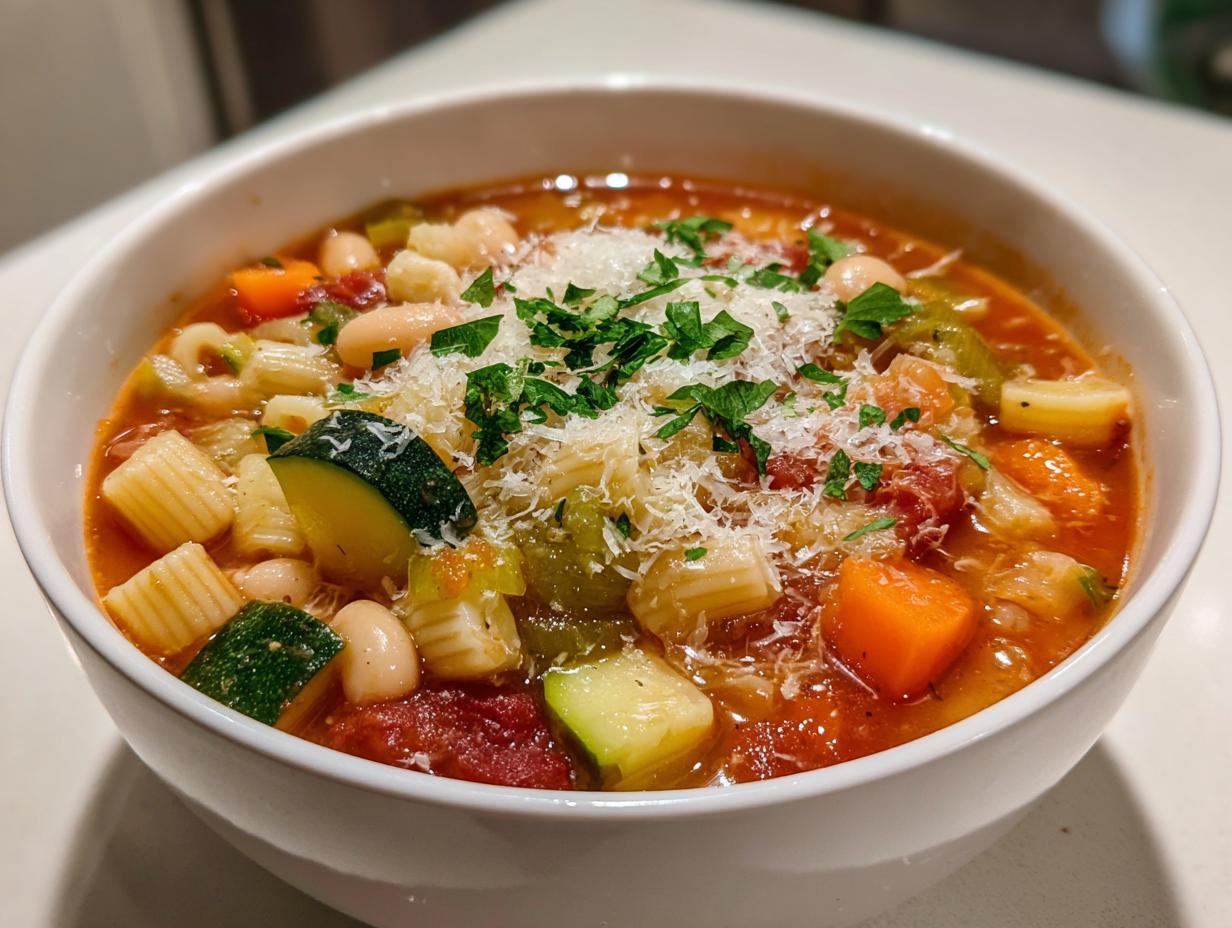
Oh, friends, there’s nothing quite like a cold evening that screams for a bowl of deep, soul-soothing comfort food, right? When that chill hits, you need a reliable recipe you can absolutely count on. That’s why I’m so excited to share this classic, hearty vegetable minestrone soup with you today. As a former teacher, my goal is always clarity, and having spent decades cooking for my own family, I know a soup needs depth without demanding hours of fuss. For a different kind of classic comfort, you should also check out my recipe for homemade cream of chicken soup.
This isn’t just any soup; it’s how we make sure dinner is both healthy and incredibly satisfying. We are focusing purely on achieving that rich, traditional Italian vegetable soup flavor that tastes like it simmered all day, even though we can get it on the table fast. Trust me, this straightforward method is my go-to for feeding all my grandchildren!
- Why This Classic Vegetable Minestrone Soup is a Weeknight Staple
- Gathering Ingredients for Your Vegetable Minestrone Soup
- Step-by-Step: How to Make Minestrone From Scratch (Stovetop)
- Tips for the Perfect Vegetable Minestrone Soup Consistency
- Customizing Your Italian Vegetable Soup: Additions and Variations
- Minestrone Serving Ideas and Garnishes
- Storage and Making Ahead for Your Easy Minestrone Soup Recipe
- Frequently Asked Questions About Vegetable Minestrone Soup
- Sharing Your Traditional Vegetable Soup Experience
Why This Classic Vegetable Minestrone Soup is a Weeknight Staple
I keep this recipe close because it ticks every box when you need a dependable dinner. It’s the perfect marriage of flavor and ease, which is why it’s a permanent fixture in my winter rotation. You’re going to love this easy minestrone soup recipe!
- It’s packed with healthy vegetables, making it a genuinely satisfying dinner.
- It comes together on the stovetop in under an hour.
- It freezes beautifully for those days you can’t cook.
- It’s incredibly flexible—use whatever fresh produce you have on hand!
Honestly, if you have some odds and ends laying around, you can turn them into this wonderful chickpea soup alternative.
Gathering Ingredients for Your Vegetable Minestrone Soup
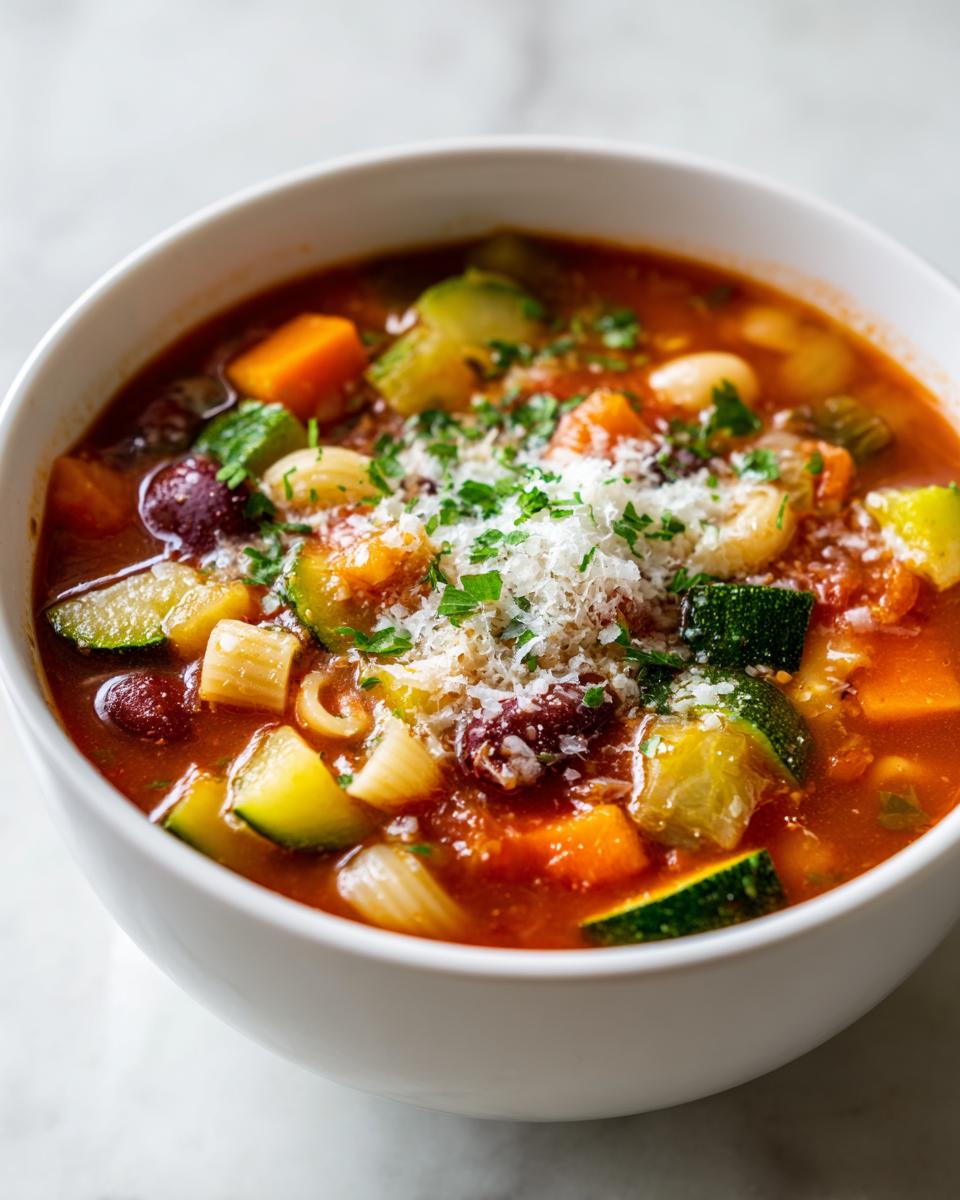
To make this truly the best hearty vegetable soup, we need to start with good building blocks. Everything goes into the pot relatively early, so the quality of what you choose makes a big difference! We start with a couple of tablespoons of good olive oil, which we use to soften our aromatic vegetables: one large onion, two carrots that you’ll want to peel and dice, and two stalks of celery, also diced up.
Next comes the heart of the flavor—don’t forget the two cloves of garlic, which we chop finely and add just until you can smell them. For the liquid, I always insist on using 6 cups of vegetable stock. Using a proper broth instead of just water makes this recipe sing! You’ll also need one 14.5-ounce can of diced tomatoes (juice and all), a teaspoon of dried oregano, half a teaspoon of dried basil, and one humble bay leaf to simmer along for depth.
Don’t worry about fresh herbs yet; we bring those in at the end. For the hearty stuff, plan on about a cup of firm seasonal veggies, like zucchini or green beans, 15 ounces of cannellini beans (rinsed well!), and half a cup of small pasta shapes. And of course, we finish it off with Parmesan cheese and fresh parsley for serving.
Ingredient Notes and Substitutions for the Best Hearty Vegetable Soup
When it comes to those seasonal vegetables, feel free to adjust based on what looks best at the market. If kale is in season, toss some chopped kale in when you add the beans! Kidney beans or chickpeas work just as beautifully as the cannellini beans if that’s what you have open in the pantry. When you’re buying pasta, look for something very small, like ditalini or even small elbow macaroni. If the pieces are too big, the soup doesn’t feel right. Also, if you feel ambitious, making your own homemade vegetable broth soup base takes this soup entirely to the next level—it’s worth the effort!
Step-by-Step: How to Make Minestrone From Scratch (Stovetop)
Now for the fun part—getting this beautiful traditional vegetable soup bubbling away! Since we’re doing this on the stovetop, we have great control over the flavor buildup every step of the way. Grab your largest pot or Dutch oven, because we’re going to build layers of goodness. If you want something similar but heartier, feel free to look at my recipe for easy old-fashioned vegetable beef soup, but today we stay vegetarian!
Building the Flavor Base for Traditional Vegetable Soup
First things first: heat up 2 tablespoons of olive oil over medium heat. We want that oil warm, not smoking hot! Toss in your onion, carrots, and celery—that classic Italian trio. You need to let these cook until they start to soften up nicely, which usually takes about 5 to 7 minutes of stirring now and then. This is important, folks! You’re not just softening them; you are sweating out their wonderful sweetness, which builds the backbone of your broth. Once they look a little translucent, toss in the minced garlic. Don’t walk away now, because garlic burns fast! Cook it for just 60 seconds until you can really smell that fantastic aroma filling your kitchen.
Simmering and Adding Pasta to Your Vegetable Minestrone Soup
Once the garlic is fragrant, pour in your 6 cups of vegetable stock and add the diced tomatoes (don’t drain that juice!). Then, stir in your oregano, basil, and that trusty bay leaf. Bring the whole thing up to a rolling boil, but then immediately turn that heat down low, cover it just a bit, and let it simmer gently for a full 15 minutes. That lets the dried herbs really wake up! After that, toss in your 1 cup of seasonal veggies and the rinsed cannellini beans. Simmer again for 10 minutes until those new vegetables are just tender.
Now—the pasta! Increase the heat a touch and stir in that half-cup of small pasta shapes. This is where you need to pay attention: cook them according to the package directions, usually 8 to 10 minutes, but stir frequently! Pasta loves to stick to the bottom of a pot when it’s cooking in soup, so keep scraping the bottom so you don’t get a scorched layer. When the pasta is nice and firm—al dente is what we’re looking for—pull that bay leaf out completely! Finally, stir in your 1/4 cup of good grated Parmesan until it melts right into the broth. Season with salt and pepper until it tastes perfect to you!
Tips for the Perfect Vegetable Minestrone Soup Consistency
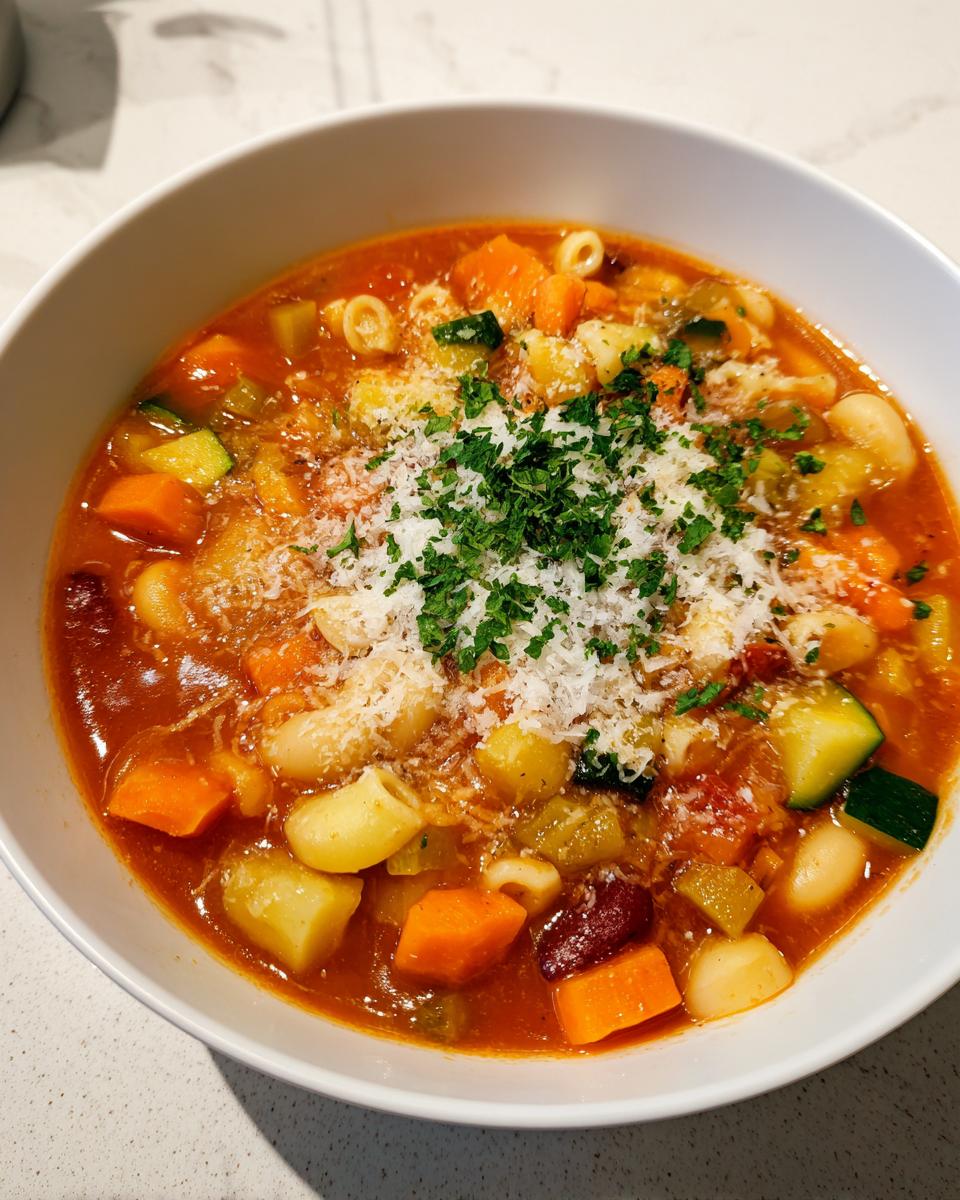
Getting the broth just right is often the difference between a watery soup and that incredible, almost stew-like texture we crave in a vegetarian soup recipes for dinner. I learned from my mother that you can truly manipulate the thickness of minestrone right on the stovetop without resorting to flour or cornstarch, which I find dulls the fresh vegetable flavor.
The secret, if you can call it that, is found right there among your ingredients: the beans! When you get near the end of cooking, right before you add your dry pasta, take about half a cup of those cooked cannellini beans out of the pot. Pop them into a small bowl and mash them up really well with the back of a fork until they are almost a paste.
Drop that bean paste right back into the soup and stir hard. Those mashed white beans will dissolve slightly as you stir and release their natural starch. This gives the broth a silky, satisfying texture that coats the vegetables perfectly. It’s a trick I picked up when making my version of French onion soup, but it works wonders here too!
If you find that your broth is still too thin after the pasta cooks (sometimes the pasta doesn’t release enough starch), don’t panic! Just take a small ladle of the hot soup broth itself and whisk it vigorously with a teaspoon of cornstarch in a separate cup. Then, slowly stream that mixture back into the simmering soup while stirring constantly. Let it bubble for just two minutes, and you’ll see it thicken right up. But honestly, mashing those beans first usually does the trick beautifully for this traditional vegetable soup.
Customizing Your Italian Vegetable Soup: Additions and Variations
One of the best parts about making a big pot of Italian vegetable soup like this is that it truly begs you to make it your own. It’s not a fussy recipe; it’s a flexible canvas! If you’re feeling like you want more substance or just want to use up that last bit of produce in the crisper drawer, I say, go for it. That’s the heart of home cooking right there—making what works for your family.
While the core recipe is wonderful, if you’re looking to bulk it up, consider adding heartier root vegetables along with the first batch of vegetables. Potatoes, cubed small, are fantastic in minestrone, but remember they take a bit longer, so add them at the very beginning with the carrots and celery. Another favorite addition of mine, especially when the weather gets really cold, is butternut squash. I love roasting my squash ahead of time, but you can cube it raw and add it in when you add the zucchini. If you’ve never tried roasted vegetables in your soup, you are in for a treat! You can find some great preparation tips for squash over at my recipe for roasted butternut squash.
We already talked about swapping the cannellini beans for alternatives like kidney beans or chickpeas, but don’t stop there! If you happen to have leftover cooked sausage or ground turkey, you can absolutely brown that up in the pot *before* you add the olive oil to sauté your onion, celery, and carrots. Just drain off any excess grease before moving on to the next step. This turns it from a lovely vegetarian dinner into something much more robust, but it keeps that distinct Italian flavor we are after.
Also, feel free to play with your greens! If you want that deeper, slightly bitter edge that Italian soups often have, use chopped kale or sturdy Swiss chard towards the very end of cooking—just stir them in five minutes before the pasta is done so they wilt down perfectly but keep some of their texture.
Minestrone Serving Ideas and Garnishes
You’ve worked hard simmering those vegetables, and now it’s time for the grand finale! A fantastic bowl of vegetable minestrone soup deserves the right supporting cast. Don’t just ladle it into a plain bowl and call it a day—these finishing touches really wake up the flavors we worked so hard to build.
First and most importantly, you need something absorbent and crusty to scrape up every last drop of that flavorful broth. There is simply no debate: serve this with thick slices of crusty bread. My favorite companion for this soup is a good artisan bread, especially one rubbed with a little garlic while it’s still warm. If you want to try making a perfect side, I have a wonderful recipe for easy artisan garlic parmesan bread that pairs beautifully!
Next, we have to talk about the cheese. Remember that 1/4 cup of grated Parmesan we stirred into the pot? That’s just the base layer! You absolutely have to serve this soup with a small bowl of extra, freshly grated Parmesan on the side. My family insists on piling it high, letting it melt into the hot liquid. It adds a wonderful salty kick that balances out the sweetness of the carrots and tomatoes.
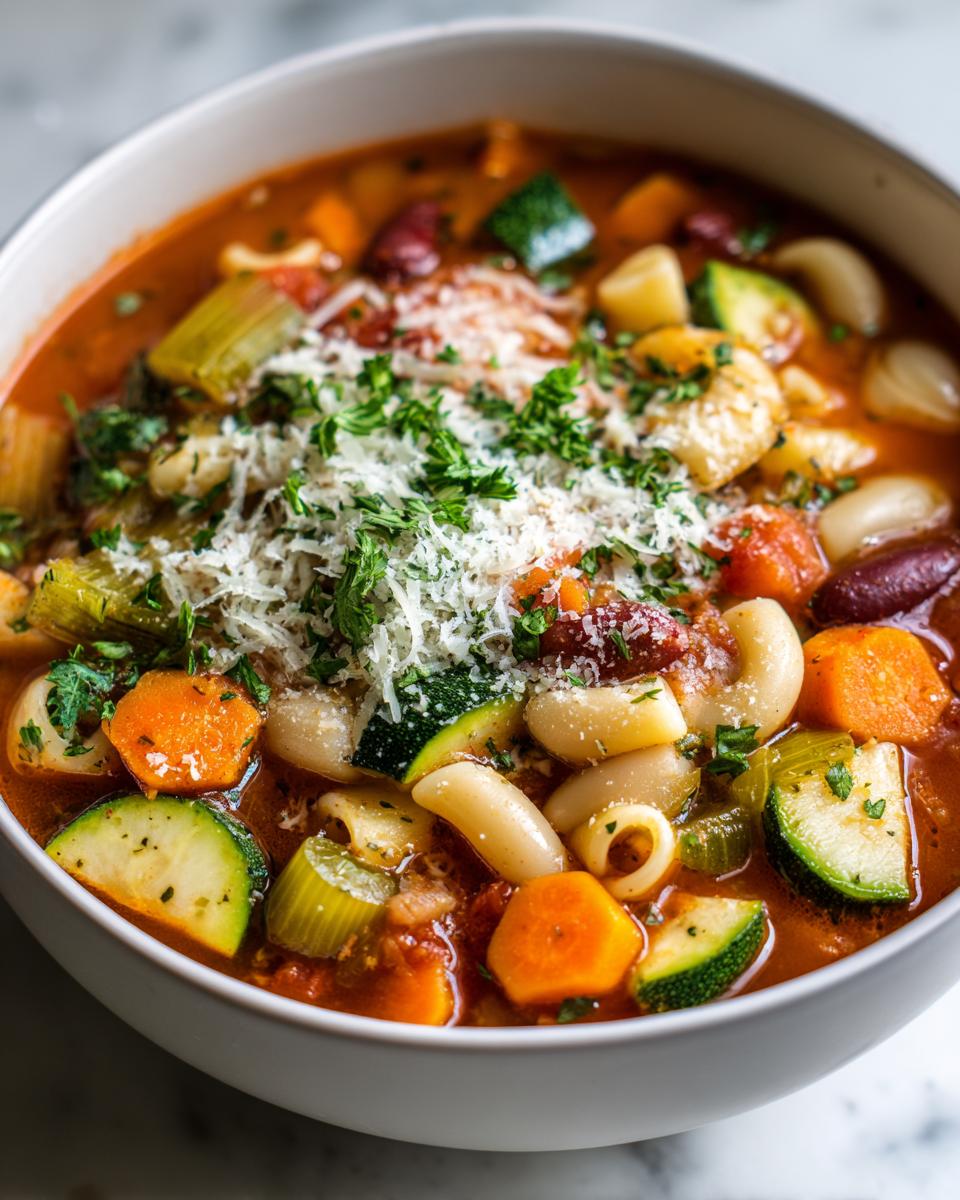
Finally, this is where you get to look fancy with almost no effort: the olive oil drizzle. Right before you hand the bowl to your loved one, take a very small spoon and drizzle just a tight circle or zig-zag of your *best* extra virgin olive oil right over the top. It sounds simple, but that high-quality oil, when added last, gives the soup this beautiful, glossy sheen and a fresh, peppery fragrance that you just can’t get by cooking with it.
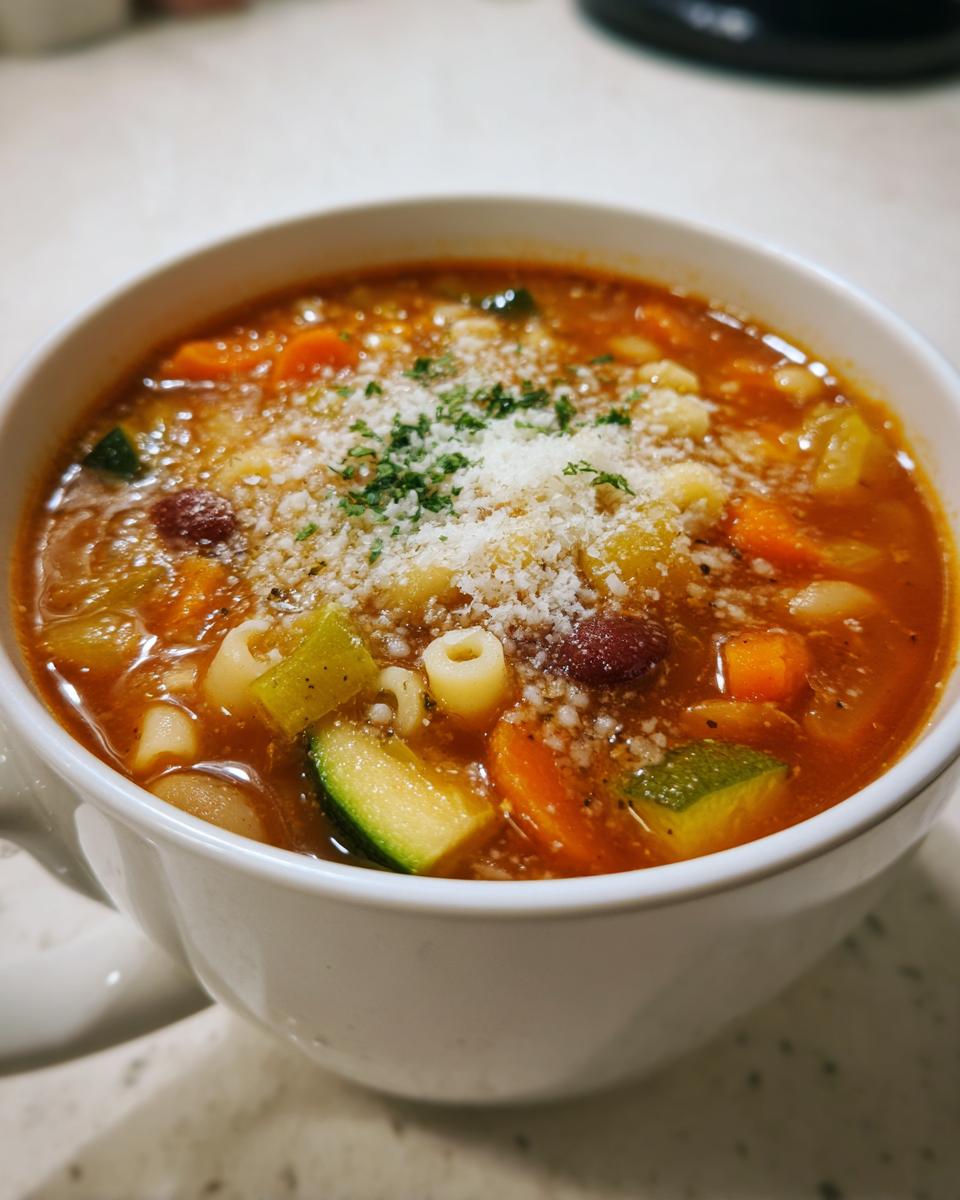
If you follow those three steps—crusty bread, extra Parmesan, and that little drizzle of good oil—you take a simple, healthy soup and elevate it right into restaurant quality. It’s the perfect way to finish off any cozy dinner.
Storage and Making Ahead for Your Easy Minestrone Soup Recipe
One of the things I truly appreciate about a giant pot of this easy minestrone soup recipe is that it’s even better the next day! Since it’s full of sturdy vegetables and beans, it holds up incredibly well in the refrigerator. You’ll want to store leftovers in airtight containers, and I usually aim for portions that hold about two servings each. It keeps wonderfully refrigerated for up to four days.
Now, if you’re looking ahead to busy weeks, this freezes like a dream. I usually like to freeze minestrone *without* the pasta included, if I can remember! Pasta tends to absorb too much liquid and can get mushy when reheated from frozen. So, freeze the soup base heavy on the broth, beans, and vegetables. When you reheat a frozen portion, you just bring it to a simmer on the stove and add a small handful of fresh, uncooked small pasta shapes right into the broth. It cooks right there in the soup in about 8 minutes, and it tastes just as fresh as the day you made it. Honestly, meal planning is so much easier when you have soup like this waiting!
If you’re wondering about letting the slow cooker do the work for you, this recipe adapts beautifully too. We already sautéed those aromatics on the stove, which is the best way to start any vegetarian soup recipes for dinner. But after that initial 7-minute sauté of the carrots, celery, and onions (and garlic, of course!), you can dump everything else right into your slow cooker. If you use store-bought stock, place it all in the basin, stir it up, and set it to cook on low for about 6 hours. If you need a recipe template for other slow cooker ideas, you might find my guide for slow cooker chicken noodle soup helpful for general timing!
Just remember that if you cook it the whole way in the slow cooker, add the pasta in the last 30 minutes on high, or preferably, cook the pasta separately and stir it in right before serving, just like we do with the frozen batches. Either way, having this hearty flavor ready to go makes weeknights so much calmer!
Frequently Asked Questions About Vegetable Minestrone Soup
Can I add meat to this traditional vegetable soup recipe?
Absolutely! While this recipe focuses on being a hearty vegetable soup, minestrone is incredibly open to additions. If you want to turn this into a meatier meal, the best time to add it is right at the very beginning. Before you add your olive oil, brown about half a pound of ground Italian sausage or ground turkey right in the pot. Drain off any excess fat that renders out, and then proceed with sautéing your onions, carrots, and celery in the remaining flavorful drippings before adding the olive oil. It adds such a great depth, similar to what you’d find in a full chicken pot pie casserole!
What is the best pasta shape for minestrone with beans and pasta?
For the best texture, you really want to use small pasta shapes, like ditalini (which means ‘little thimbles’) or small elbow macaroni if that’s what you have. The goal is for the pasta to be bite-sized and swim comfortably alongside the vegetables and beans rather than dominating the bowl. About a half-cup dry is usually perfect for this recipe yield. If you wanted to try different pasta shapes, just ensure whatever you choose is small enough to be eaten easily with a spoon.
Can I use water instead of vegetable stock for my homemade vegetable broth soup base?
Technically, yes, you can, but I wouldn’t recommend it if you are looking for that rich, wonderful flavor that makes this an amazing Italian vegetable soup! Using water means you are relying entirely on the dried herbs and the natural moisture from the vegetables to flavor the broth. Good quality store-bought stock makes a huge difference, but if you can use a **homemade vegetable broth soup base**, that is truly the gold standard for flavoring this soup properly. It makes all the difference between good soup and truly great soup.
Is this recipe suitable as a quick weeknight vegetable soup?
Yes, for a soup that tastes this homemade, it’s very fast! If you stick to the recipe card, you’ll have this on the table in under an hour once you’ve prepped your vegetables. It moves quickly once you start cooking because the simmer times are relatively short. It’s definitely one of my favorites when I need a healthy, filling option for dinner without spending all afternoon over the stove.
Sharing Your Traditional Vegetable Soup Experience
Well, now you have my go-to recipe for the most comforting traditional vegetable soup you could hope for! I truly hope this makes its way into your regular dinner rotation. When you make a big, wonderful pot of this for your family, I’d just love to know what you thought of it!
Please take a moment when you get a chance to hop back over and leave a star rating and a quick comment below. Tell me what seasonal veggies you decided to use, or if you tried adding a little something extra. Did you go heavy on the Parmesan? I enjoy hearing about how you made this recipe your own!
If you have friends or family members who are always on the hunt for a fantastic, healthy meal that checks all the boxes—something that truly counts as a satisfying vegetarian soup recipes for dinner—please send them my way! Sharing these simple, heartfelt recipes is why Cooking by Carla exists in the first place. You can always learn more about my philosophy over at the About page, but for now, go enjoy that delicious bowl of minestrone!
PrintClassic Hearty Vegetable Minestrone Soup

A reliable, straightforward recipe for traditional vegetable minestrone soup, perfect for a comforting meal using seasonal vegetables.
- Prep Time: 15 min
- Cook Time: 40 min
- Total Time: 55 min
- Yield: 6 servings 1x
- Category: Dinner
- Method: Stovetop
- Cuisine: Italian
- Diet: Vegetarian
Ingredients
- 2 tablespoons olive oil
- 1 large yellow onion, chopped
- 2 carrots, peeled and diced
- 2 celery stalks, diced
- 2 cloves garlic, minced
- 6 cups vegetable stock (use homemade vegetable broth soup base for best flavor)
- 1 (14.5 ounce) can diced tomatoes, undrained
- 1 teaspoon dried oregano
- 1/2 teaspoon dried basil
- 1 bay leaf
- 1 cup chopped seasonal firm vegetables (e.g., zucchini, green beans, or chopped cabbage)
- 1 (15 ounce) can cannellini beans, rinsed and drained
- 1/2 cup small pasta shapes (like ditalini or elbow macaroni)
- Salt and black pepper to taste
- 1/4 cup grated Parmesan cheese, plus more for serving
- Fresh parsley, chopped, for garnish
Instructions
- Heat the olive oil in a large pot or Dutch oven over medium heat. Add the onion, carrots, and celery. Cook, stirring occasionally, until the vegetables soften, about 5 to 7 minutes.
- Add the minced garlic and cook for 1 minute more until fragrant.
- Pour in the vegetable stock and add the diced tomatoes (with their juice), oregano, basil, and bay leaf. Bring the mixture to a boil.
- Reduce the heat to low, cover the pot partially, and let the soup simmer for 15 minutes to allow the flavors to blend.
- Add the chopped seasonal firm vegetables and the rinsed cannellini beans to the pot. Continue to simmer for 10 minutes, or until these vegetables are tender.
- Increase the heat slightly and add the small pasta shapes. Cook according to the package directions, usually 8 to 10 minutes, until the pasta is al dente. Stir often to prevent the pasta from sticking to the bottom.
- Remove and discard the bay leaf. Stir in the 1/4 cup of grated Parmesan cheese until melted into the broth. Season with salt and pepper to your taste.
- Ladle the hearty vegetable soup into bowls. Garnish each serving with extra Parmesan cheese and fresh parsley. Serve with crusty bread.
Notes
- For a richer broth, use homemade vegetable broth instead of store-bought stock.
- You can substitute kidney beans or chickpeas for cannellini beans.
- If you prefer a thicker soup, add 1/2 cup of cooked small white beans and mash them against the side of the pot before adding the dry pasta.
- This recipe works well as a slow cooker vegetable minestrone; cook on low for 6 hours after the initial sauté step.
Nutrition
- Serving Size: 1.5 cups
- Calories: 240
- Sugar: 7
- Sodium: 550
- Fat: 6
- Saturated Fat: 2
- Unsaturated Fat: 4
- Trans Fat: 0
- Carbohydrates: 38
- Fiber: 8
- Protein: 12
- Cholesterol: 5