

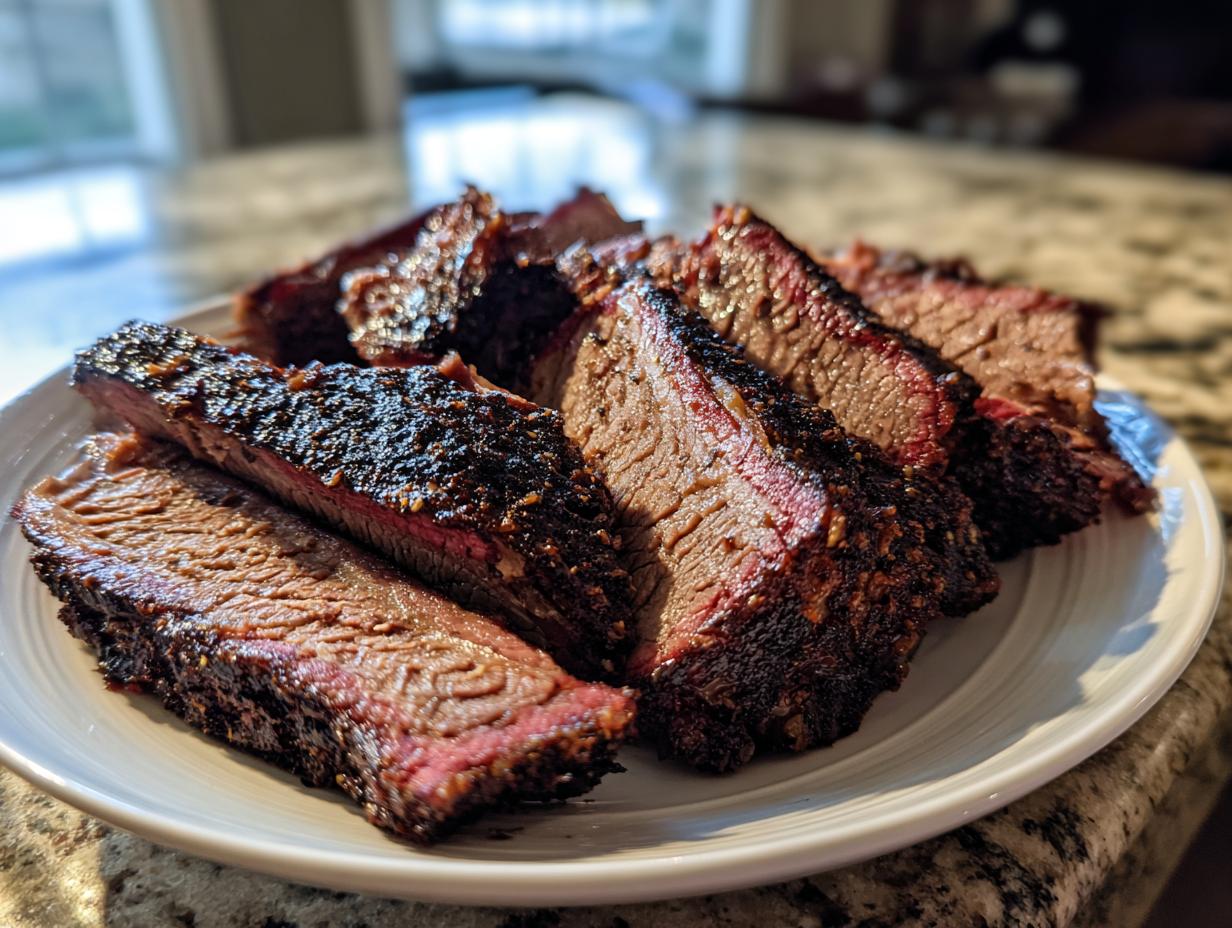
If you’ve ever dreamed of pulling off that perfect, buttery slice of meat that tastes like it came straight from a small-town Central Texas smoke pit, I’m here to tell you that dream is totally achievable right in your own backyard. For National Barbecue Day, or really, any day you want to spoil the family, we’re tackling the big one: the Texas smoked brisket. Now, some folks think you need a massive offset smoker built decades ago to get that flavor, but trust me, your pellet grill is your secret weapon here.
The magic isn’t about fancy equipment; it’s about honoring that long, slow dedication to the process. It’s the rhythm of low and slow cooking that truly develops that rich, smoky mahogany bark we all crave. Spending those quiet 12 hours tending the fire, knowing you’re preparing something incredible for everyone to gather around—there’s nothing better.
- Why This 12-Hour Texas Smoked Brisket on a Pellet Grill Works (The Carla Method)
- Ingredients for the Perfect Texas Smoked Brisket
- Preparation Steps Before Smoking Your Texas Smoked Brisket
- The Low and Slow Pellet Grill Beef Cook: 12-Hour Texas Smoked Brisket Guide
- Essential Tips for the Best BBQ Brisket Guide Results
- The Crucial Rest: Why Your Texas Smoked Brisket Needs Time
- Slicing and Serving Your Texas Smoked Brisket
- Frequently Asked Questions About Pellet Grill Brisket
- Estimated Nutritional Snapshot
Why This 12-Hour Texas Smoked Brisket on a Pellet Grill Works (The Carla Method)
There’s a real sense of victory that comes with putting a massive packer brisket on the cold smoker and trusting the process for half a day. It taps into that old-school mastery, but here’s the joy of it: your pellet grill makes the consistency part almost foolproof! That’s what I call the Carla Method—we combine that traditional low and slow dedication with modern reliability. We’re not rushing this beauty; we’re nurturing it for a full 12 hours to break down all that tough connective tissue. It’s about having optimism that the fire will stay steady!
Using a pellet grill for this Texas smoked brisket means you set it and pretty much forget it, allowing you to focus on the family instead of wrestling with firebox temperatures. It lets you concentrate on the anticipation, not the anxiety. You can find more of my foundational cooking ideas here on the site, but the principles hold true for this masterpiece.
Achieving True Texas Style BBQ Flavor
When you talk Texas style bbq, we keep the flavor profile simple and beef-forward. You aren’t looking for overwhelming sauce or sugar in the rub. You want salt, pepper, and the deep, earthy smoke flavor marrying the beef. Keep your rub basic—just those few ingredients—and let that hickory or applewood do the heavy lifting. We’re building that beautiful, dark bark that tells everyone you meant business! Keep your focus purely on building great smoke.
Ingredients for the Perfect Texas Smoked Brisket
Now, before we get that grill fired up, we need the right players on our team. Don’t substitute the main star here; you need a real, honest-to-goodness whole packer brisket. That’s the kind that still has both the flat and the point attached. When you’re buying, aim for something between 12 and 16 pounds so you have enough meat to last through this long cook! We need plenty of seasoning to create that fantastic bark when we go low and slow.
I rarely make my own sauce when I smoke brisket—the meat should stand alone—but I do make sure my rub is perfect. You can find my method for a complementary sauce later, but for now, let’s focus on the seasoning. You might want to check out this sauce recipe just in case you change your mind later, but trust Carla on this one: the rub is what matters most right now.
Here is exactly what you need on hand before you start trimming:
- One whole packer brisket (aiming for 12 to 16 lbs, remember!)
- 1/4 cup coarse black pepper—this is crucial for the texture of the bark, so don’t use the fine stuff!
- 1/4 cup kosher salt—we’re using a lot of salt because it’s a giant piece of meat!
- 2 tablespoons garlic powder
- 1 tablespoon onion powder
- 1 tablespoon smoked paprika
- 1 teaspoon cayenne pepper (Only if you like a little kick that sneaks up on you.)
- Applewood or hickory pellets—these are the woods that give you that classic Texas profile.
Preparation Steps Before Smoking Your Texas Smoked Brisket
This is where we step away from the quick meals and get down to the satisfying work of preparation. Trimming this big cut of meat correctly sets you up for success later on; poor trimming means uneven cooking, and nobody wants a dry flat end! You also need to give your seasoning time to work its magic deep into the meat fibers before it ever sees smoke. Get these steps right, and you’re already halfway to the best smoked brisket recipe you’ll ever try.
I know folks use all sorts of marinades for other meats—and you can certainly check out my favorite chicken marinade if you’re curious—but for brisket, we stick strictly to a dry rub. Keep it simple, keep it even, and have patience!
Trimming the Packer Brisket: What to Remove
When you look at that whole packer, you’ll see some thick, hard chunks of fat, especially on the underside of the flat. Those hard bits won’t render down nicely, they just get waxy, so take your sharpest knife and trim that hard fat away. We want to leave about a quarter-inch of the softer fat cap across the rest of the flat side. This cap is essential; it melts slowly during the cook, basting the flat and keeping it incredibly juicy!
Applying the Rub for Your Smoked Brisket Recipe
Mix up all your salt, pepper, and spices until everything is evenly distributed—you want every single grain of salt sitting next to a grain of pepper. Now, coat that entire brisket head-to-toe. Don’t be shy! Cover every surface thoroughly with your rub mixture. Once it’s coated, wrap it up loosely and let it sit on the counter at room temperature for at least one full hour before you preheat that pellet grill. This resting time lets the salt start to penetrate the meat, which is key for developing a great flavor structure.
The Low and Slow Pellet Grill Beef Cook: 12-Hour Texas Smoked Brisket Guide
Alright, this is it—the long haul begins! We’re relying on that steady heat from the pellets now. Get your grill set right to 225 degrees Fahrenheit. For this style of pellet grill beef, I always recommend using hickory or applewood pellets for that deep, savory smoke only Texas style bbq understands. Place your brisket fat-side up on the grate. We are going to let it cook untouched for the first stretch. You are looking for the internal temperature in the thickest part of the flat to hit 160 degrees Fahrenheit. This usually takes about 8 to 10 hours, and this is where that famous stall happens!
Don’t panic when the temperature holds steady around 150°F for hours; that’s completely normal for a slow cooked brisket. Some folks spritz it with vinegar during this time for extra moisture—which you can read more about in the tips section—but the important thing is to maintain that low heat and let the smoke work its magic. You need that temperature milestone before we move to the next phase!
Managing the Stall and Wrapping the Texas Smoked Brisket
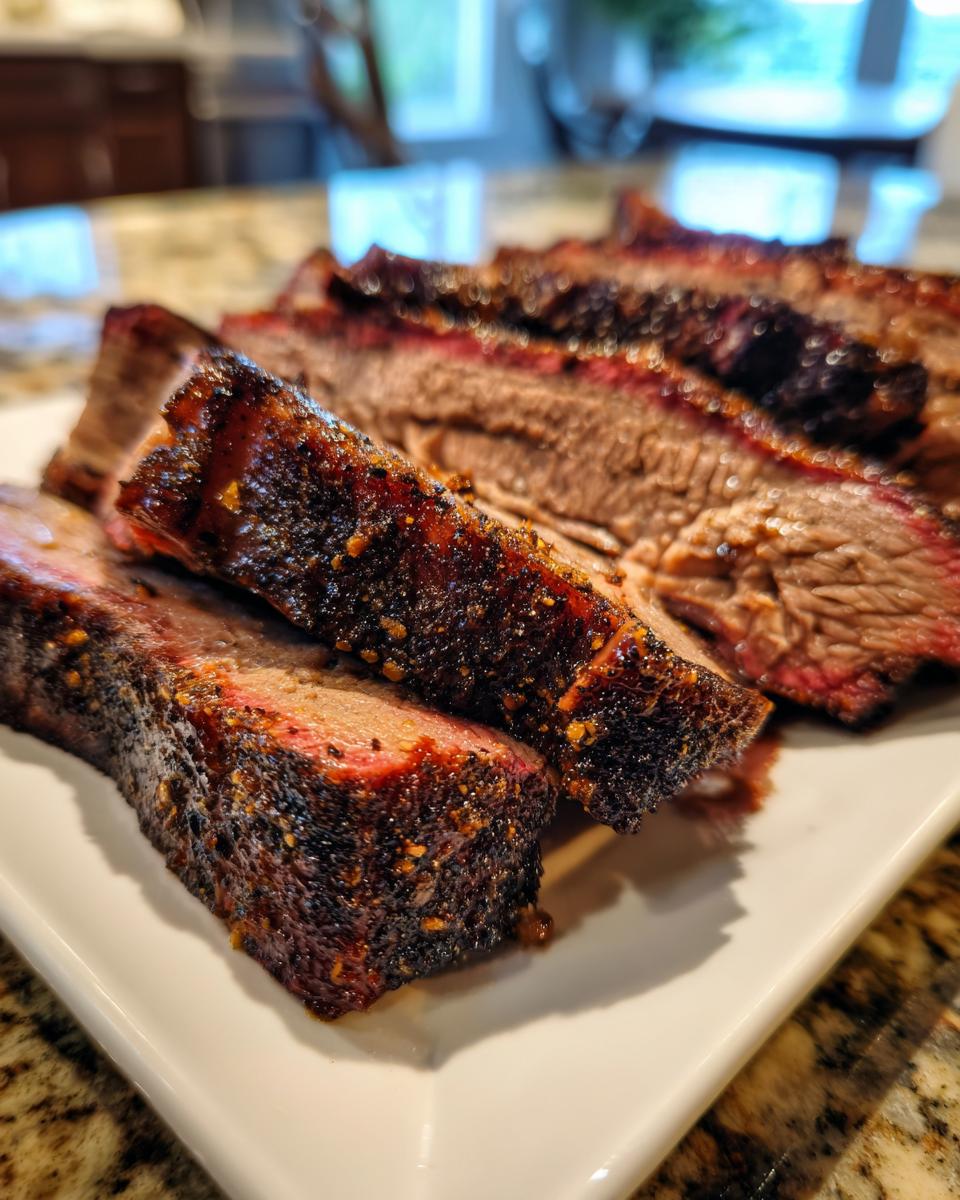
Once you hit that 160°F mark, it’s time to wrap it up tight—we call this the Texas Crutch! Pull that brisket off and wrap it completely in butcher paper, or heavy-duty foil if you must, but I prefer the paper for tenderness. Why wrap? It pushes past that stall quickly by trapping the heat and moisture. When you put it back on the smoker, bump that temperature up slightly to 250 degrees Fahrenheit. This final push gets the meat tender, cooking another 3 to 4 hours until your probe slides in like it’s going into warm butter, usually hitting that magical 200°F to 205°F range. We’re aiming for that beautiful melt down, and I link to some great oven chicken tips here, but the low-and-slow temperature spike for brisket is key!
Essential Tips for the Best BBQ Brisket Guide Results
You’ve got the main cook handled, but to truly elevate this from “good brisket” to the best bbq brisket guide experience, you need to pay attention to the little things. These are the bits of wisdom I’ve collected over the years of smoking meat for family celebrations. Don’t skip these finishing touches; they make all the difference between tender and fall-apart tender!
First, and I cannot stress this enough, you absolutely must use a reliable meat thermometer. This isn’t the time to guess! You need to know that internal temperature for both the stall and the finish. If you’re struggling to keep your roast tender in the oven, you can look up my tips for slow cooker pot roast, but for brisket, precision matters when we’re talking about texture.
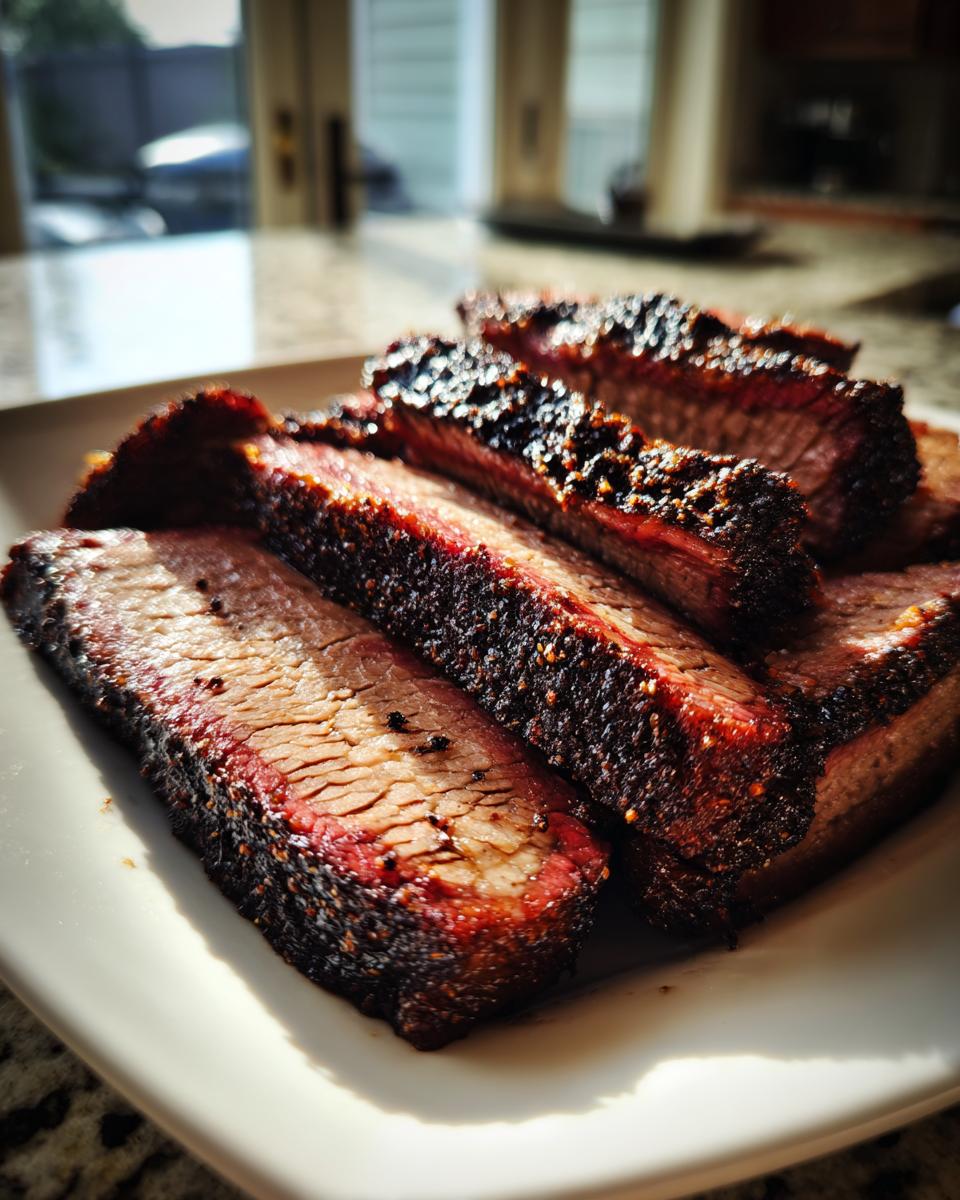
Also, if you are chasing that deep, gorgeous smoke ring—that bright pink band just under the bark—you’ll want to try my spritz trick. For about the first four hours while the brisket is just smoking at 225°F, take a small spray bottle filled with apple cider vinegar and lightly mist the surface every hour. It evaporates quickly and helps set that color early on. It’s totally optional, but it sure looks impressive when you slice into it later!
Finally, when you go to slice this beautiful, slow cooked brisket, remember to separate the flat and the point sections first. They have completely different grain directions, so slicing them as two separate pieces ensures every single slice, whether it’s from the leaner flat or the fatty point, is perfectly against the grain. That ensures max tenderness, every single time.
The Crucial Rest: Why Your Texas Smoked Brisket Needs Time
If you pull that brisket off the smoker right at 203 degrees and immediately start slicing, I’m going to be disappointed in you! I know you’re hungry, and that smell is driving you mad, but I’ve seen folks ruin twelve hours of hard work in five minutes by skipping this step. The resting period is absolutely non-negotiable for a successful slow cooked brisket. It’s the final, quiet stage of the cook.
You need to wrap that finished brisket tightly in whatever you used for wrapping—butcher paper is great—and tuck it away somewhere warm, but not hot. A dry cooler packed with old towels works perfectly, or even a slightly warmed oven turned off completely. You are aiming for at least two hours minimum, but honestly, three or four hours is even better. This resting time lets all those juices, which were forced to the center by the heat, redistribute back into the muscle fibers. If you slice it too soon, all that priceless moisture runs right out onto your cutting board. Think of it as letting the beef relax and reabsorb everything it needs to be outrageously tender.
When I’m short on time, I sometimes rely on my slow cooker for meals like steak bites, but for brisket, patience in resting is what separates the good barbecue from the truly legendary. Take the time; it’s worth every single minute!
Slicing and Serving Your Texas Smoked Brisket
The moment of truth has finally arrived! You’ve waited those agonizing hours for the rest, and now it’s time to see what twelve hours of low and slow dedication to your Texas smoked brisket has yielded. You need a very sharp, long slicing knife for this part. Remember what I mentioned earlier about the two separate muscles? Before you slice anything, gently separate that flat section from the much fattier point section. They always cook a little differently, and they definitely slice differently.
The flat is the leaner part, so you need to follow its grain line exactly. Run your knife against that grain and aim for slices about a quarter-inch thick. You want those slices wide enough to have a good chew, but thin enough that they almost fall apart when you pick them up. If you cut with the grain, you’ll end up with tough, chewy steak instead of wonderful barbecue!
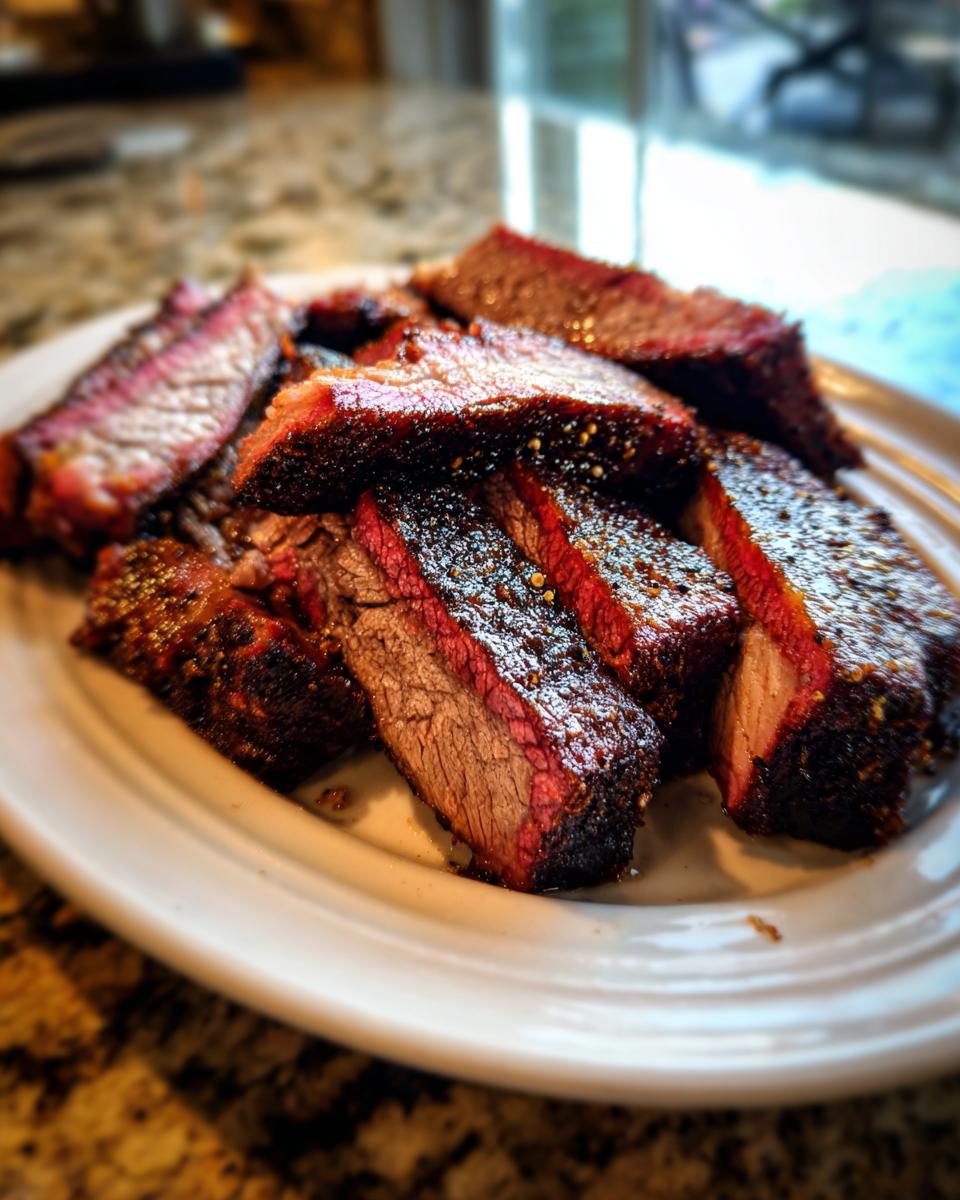
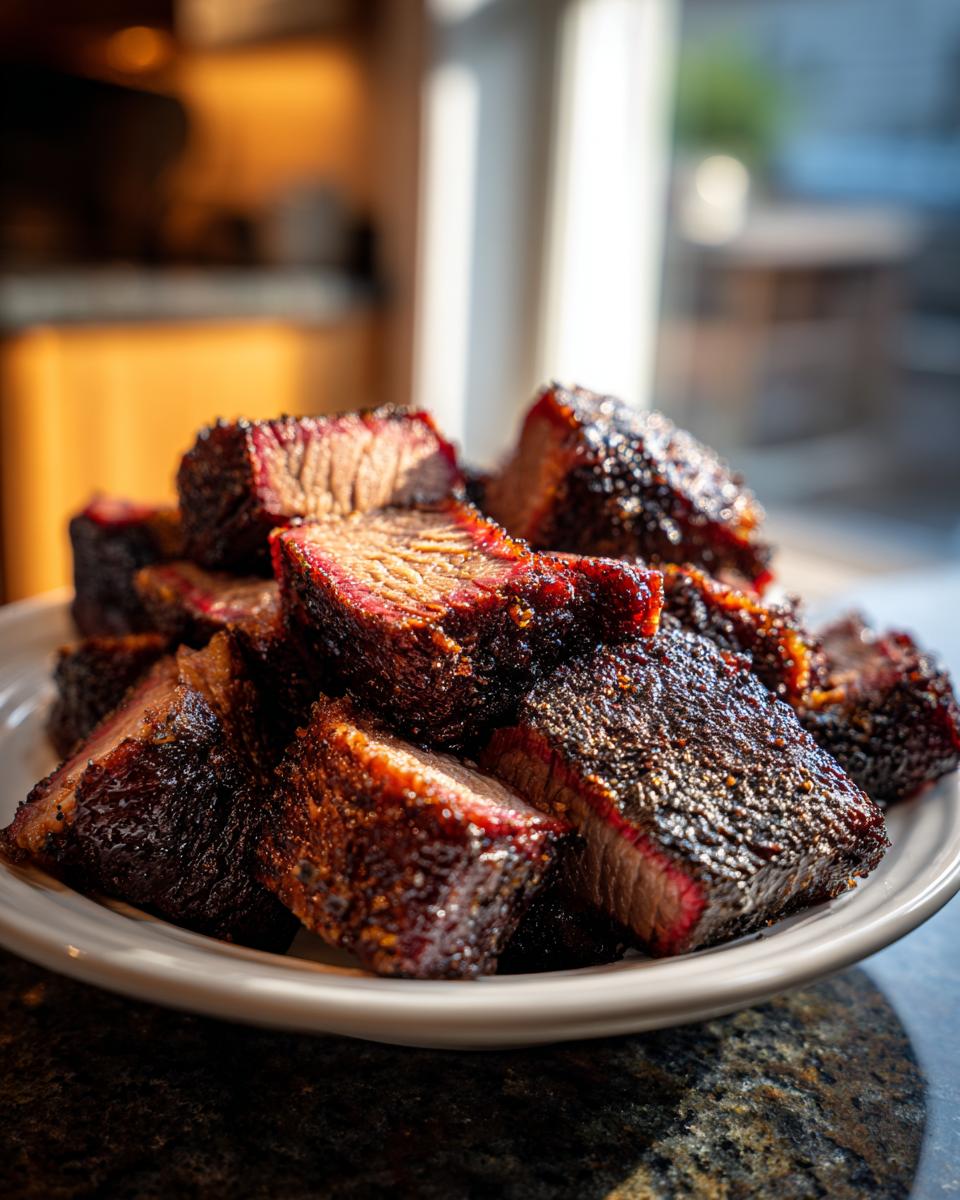
Once the flat is done, you turn your attention to the point. That section is richer and wonderfully marbled. You can slice this one similarly against the grain, or, if you want to get real fancy for your family gathering, you can cube up the point and toss it back on the smoker for another hour or so to make amazing burnt ends! Either way, slice it thick enough to appreciate that beautiful smoke ring and that dark, peppery bark you worked so hard to build.
Frequently Asked Questions About Pellet Grill Brisket
When you commit to a 12-hour cook like this, you’re bound to have questions pop up along the way! I’ve heard all sorts of concerns over the years from folks trying this for the first time, especially when it comes to using a pellet grill for something as serious as Texas style bbq. Don’t you worry, we’ll clear up the confusion so you can focus on enjoying your National Barbecue Day feast.
What is the best wood for Texas smoked brisket on a pellet grill?
For that authentic, deep flavor that complements beef so perfectly, you really can’t beat applewood or hickory pellets. That’s what I used for this particular Texas smoked brisket recipe. The key here is avoiding super sweet woods like cherry in large quantities, as that can sometimes clash with the simple salt-and-pepper rub. Hickory gives you a bold, classic flavor, while applewood is a little milder but still delivers that unmistakable smoky backbone.
How do I know when my slow cooked brisket is done?
This is the million-dollar question, isn’t it? You can’t just rely on the clock when you’re going slow cooked brisket. The primary indicator is the internal temperature; you need the thickest part of the flat to hit between 200 and 205 degrees Fahrenheit. But honestly, temperature is only half the story. You need to check the *feel*. When you gently probe the meat with a thermometer or a skewer, it should feel like sliding that probe into warm, softened butter. If you feel any resistance at all, give it another 20 or 30 minutes. That buttery feel means the connective tissue has finally melted away!
If you’re looking for other ideas on how to manage long cooks, maybe when you’re not smoking but just need an easy weeknight meal, I’ve got some great tips for quick breakfast recipes that use simple techniques too! But for brisket, the thermometer and the probe are your best friends.
Estimated Nutritional Snapshot
Now, I want to talk about the numbers, because while this is pure comfort food, I know some of you are tracking things. Please remember, this is just an estimate! With a cut of meat this large, where the fat cap renders down differently every single time—and we aren’t measuring the drippings we catch!—your actual results will vary. This snapshot is based on the components listed in my main smoked brisket recipe, sliced into 4-ounce portions.
This is hearty, protein-packed food designed for a serious gathering, and it shows in the figures!
- Serving Size: 4 oz
- Calories: 350
- Protein: 30g
- Fat: 25g (Note: This includes some of that glorious rendered brisket fat!)
- Sodium: 450mg
- Carbohydrates: 2g
- Sugar: 1g
It’s important to treat these figures as a guideline only. If you trim off more fat, your numbers change. If you decide to use my homemade sauce—which you can read about here in my general information section—you’ll want to adjust accordingly! The most important thing is that this slow cooked brisket is made with simple ingredients, giving you peace of mind about what you’re serving your family.
PrintTexas Smoked Brisket on a Pellet Grill: A 12-Hour Guide
Follow this straightforward guide to smoke a tender, flavorful Texas style BBQ brisket using your pellet grill for a perfect family gathering.
- Prep Time: 30 min
- Cook Time: 12 hours
- Total Time: 12 hours 30 min
- Yield: 12-16 servings 1x
- Category: Main Course
- Method: Smoking
- Cuisine: American
- Diet: Low Fat
Ingredients
- 1 whole packer brisket (12–16 lbs)
- 1/4 cup coarse black pepper
- 1/4 cup kosher salt
- 2 tablespoons garlic powder
- 1 tablespoon onion powder
- 1 tablespoon smoked paprika
- 1 teaspoon cayenne pepper (optional)
- Applewood or hickory pellets
Instructions
- Prepare the brisket: Trim excess hard fat, leaving about a 1/4 inch fat cap on the flat side.
- Mix the rub: Combine the salt, pepper, garlic powder, onion powder, paprika, and cayenne pepper in a bowl.
- Apply the rub: Coat the entire brisket evenly with the rub mixture. Let the brisket rest at room temperature for at least one hour before smoking.
- Preheat the pellet grill: Set your pellet grill to 225 degrees Fahrenheit and use applewood or hickory pellets.
- Smoke the brisket (The Stall): Place the brisket fat-side up on the smoker grate. Maintain the temperature at 225°F for 8 to 10 hours, or until the internal temperature reaches 160 degrees Fahrenheit in the thickest part of the flat.
- Wrap the brisket (The Texas Crutch): Remove the brisket from the smoker. Wrap it tightly in butcher paper or heavy-duty aluminum foil.
- Continue cooking: Return the wrapped brisket to the smoker. Increase the temperature to 250 degrees Fahrenheit. Cook for another 3 to 4 hours, or until the internal temperature reaches 200 to 205 degrees Fahrenheit and the probe slides in with little resistance.
- Rest the brisket: Remove the brisket from the smoker. Keep it wrapped and let it rest in a dry cooler or an insulated container for at least 2 hours, up to 4 hours. This resting period is key for the best bbq brisket guide results.
- Slice and serve: Unwrap the brisket. Slice the meat against the grain into 1/4 inch thick slices. Serve immediately.
Notes
- For the best results with your slow cooked brisket, use a reliable meat thermometer to monitor the internal temperature.
- If you prefer a deeper smoke ring, spritz the brisket lightly with apple cider vinegar every hour during the first 4 hours of the smoke.
- When slicing, separate the flat and the point sections before cutting.
Nutrition
- Serving Size: 4 oz
- Calories: 350
- Sugar: 1
- Sodium: 450
- Fat: 25
- Saturated Fat: 10
- Unsaturated Fat: 15
- Trans Fat: 0
- Carbohydrates: 2
- Fiber: 0
- Protein: 30
- Cholesterol: 100